Hunter Douglas Blinds: Types, Cost & Alternatives
Table of Contents
- Hunter Douglas Blinds: What You’re Choosing Between
- Hunter Douglas Blinds Cost: What Affects Price
- Hunter Douglas Electric Blinds: Motorization Options
- Hunter Douglas Blinds for Sloped Windows and Unusual Shapes
- Hunter Douglas Blinds Repair and Long-Term Durability
- Energy Efficiency and Light Control Benefits
- Are Hunter Douglas Blinds Worth the Price? Alternatives and Value
- Frequently Asked Questions
Last Updated: October 10, 2026
Hunter Douglas Blinds: What You’re Choosing Between
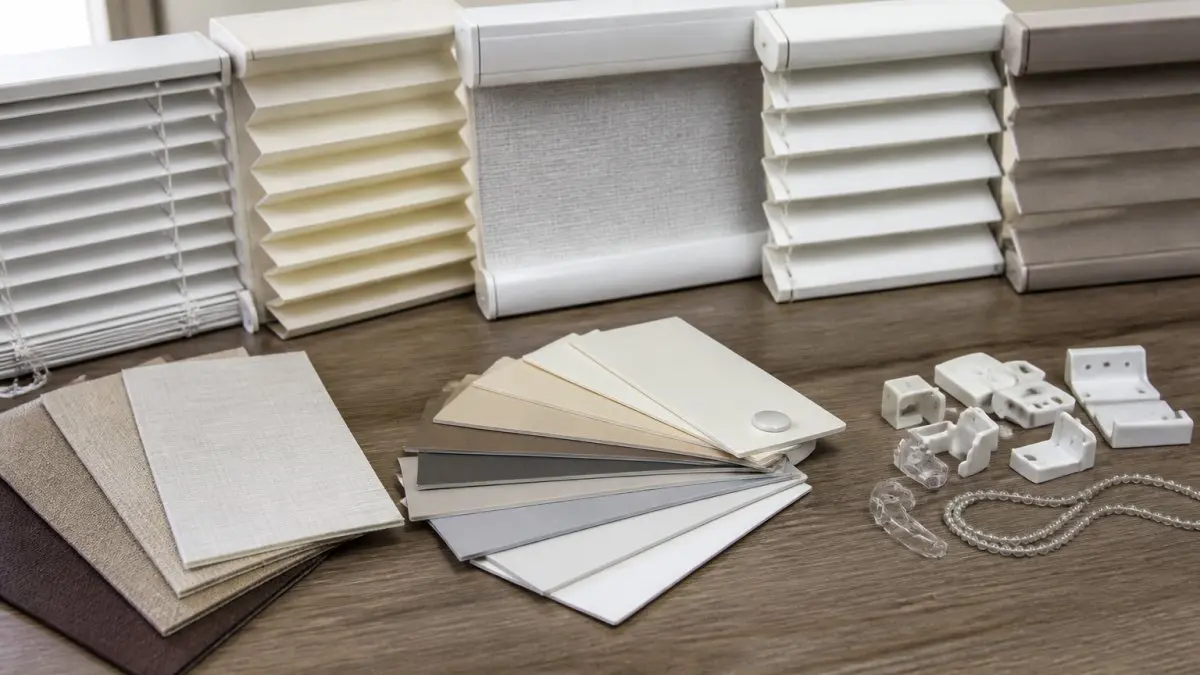
Shopping for Hunter Douglas blinds means choosing between fundamentally different approaches to light control, privacy, and style. The wrong choice can leave you with gaps, poor light control, or a mismatched look.
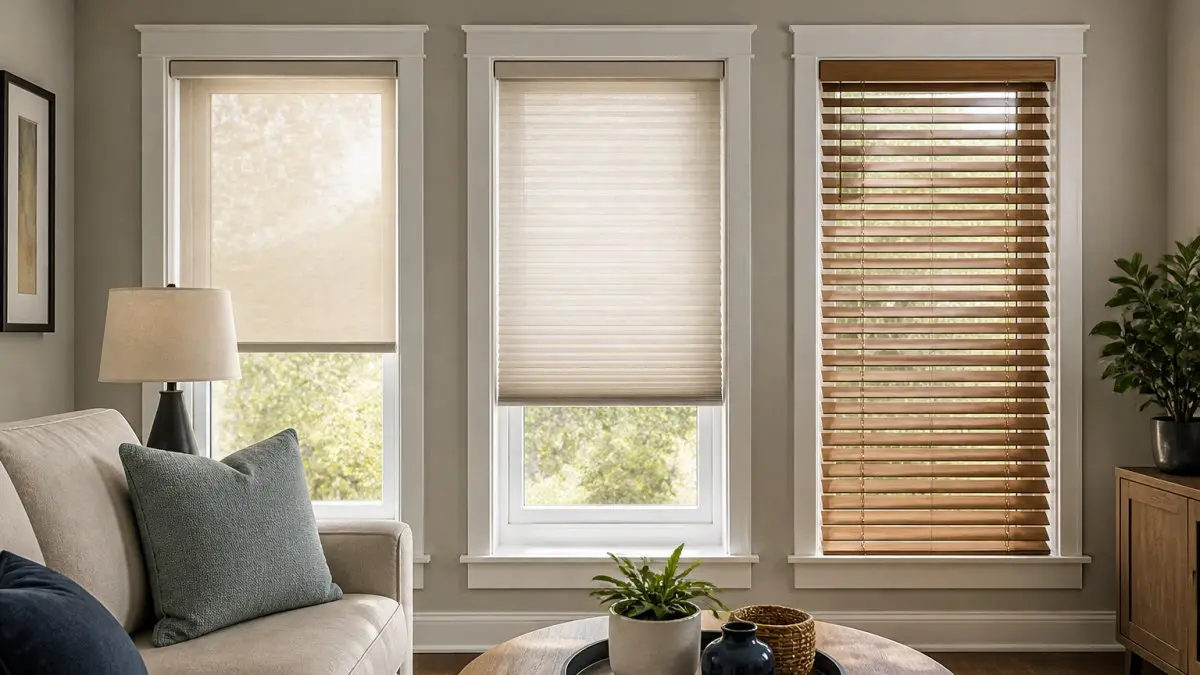
At Carroll Shade, we’ve helped hundreds of Boston and Brookline homeowners navigate this decision.
Roller shades and solar shades
Roller shades are the simplest Hunter Douglas option: a single fabric panel on a spring mechanism, with clean lines and minimal visual weight.
The trade-off: roller and solar shades insulate less than cellular shades and offer less privacy when closed, since light still filters through the fabric.
Cellular shades and banded shades
Cellular shades use a honeycomb structure that traps air for insulation; banded shades add a decorative horizontal fabric band. Both block light and provide privacy better than roller shades.
The cellular design holds up well in humid spaces like bathrooms and kitchens.
Faux wood and metal blinds
Faux wood blinds mimic real wood with a composite material resistant to moisture and warping. Metal (aluminum) blinds are lightweight and durable. Both offer excellent light control through individual slat adjustment.
Faux wood and metal blinds offer a traditional aesthetic.
Hunter Douglas Blinds Cost: What Affects Price
Hunter Douglas blinds are a premium, made-to-measure purchase, so the honest answer to “how much” is a range. Focus on the levers that move price and cost per window over the product’s life.
The factors that move the price
- Product category. Basic roller or solar shades sit at the low end. Cellular and banded shades cost more due to honeycomb construction. Faux wood and metal blinds sit mid-range, while specialty shapes and motorized systems push toward the top.
- Size and window count. Every unit is cut to your exact opening, so a wide sliding-glass door costs more than a narrow casement. Whole-room projects multiply the figure.
- Installation. Professional measurement and installation is a separate line item.
Ask for a quote broken out by window, not a single lump sum. That makes it easy to see which windows are driving the total and where you could substitute a lower-cost product without hurting the room.
A realistic way to frame the budget
Sort your windows into three buckets:
- High-priority windows, bedrooms, street-facing windows, and hard-to-reach windows where you want room darkening, privacy, or motorization.
- Mid-priority windows, living rooms and offices where light filtering and glare control matter most.
- Low-priority windows, utility spaces where a simpler shade does the job.
Spending the premium on bucket one and using simpler products elsewhere is the most common way homeowners keep a whole-house project within budget.
Total cost of ownership, not just purchase price
Purchase price is only part of what you pay. A fair comparison includes:
- Product cost, the blinds themselves, priced per window.
- Measuring, often bundled with installation, but confirm in writing.
- Installation, mounting, wiring for motorized units, and trim or valance work.
Added together, the gap between premium and budget narrows, because premium products are more repairable and last longer.
Where the premium does and does not pay off
The premium is easiest to justify on windows you use daily, hard-to-reach windows, and windows where fit and finish are visible.
Hunter Douglas Electric Blinds: Motorization Options
Motorized Hunter Douglas blinds solve a real problem: hard-to-reach windows. Second-floor windows, skylights, and walls of windows make manual operation impractical.
Smart-home control and reliability
Modern motorized Hunter Douglas blinds integrate with smart-home systems, controllable from your phone, schedules, or voice commands, and the motors are designed to last years.
The trade-off is cost: motorization adds significant expense, but for hard-to-reach windows it’s often worth it.
Installation and convenience
Professional installation is essential for motorized blinds, since wiring, motor placement, and smart-home integration require expertise. A local partner like Carroll Shade handles the process.
Motorization also improves energy efficiency: program blinds to close automatically during the hottest parts of the day, reducing cooling costs.
Hunter Douglas Blinds for Sloped Windows and Unusual Shapes
Older Boston-area homes often have windows that don’t fit standard dimensions. Arched, angled, and triangle windows and skylights are charming but challenging to treat.
Angled windows and triangle windows
Hunter Douglas manufactures blinds specifically for angled and triangle windows, custom-cut to match your exact geometry. Slats or fabric panels follow the window’s angle for a tailored look.
Triangle windows are trickiest because the space narrows to a point, and standard blinds leave gaps. Custom Hunter Douglas blinds fill the entire space, maintaining light control and privacy.
Measuring and installation for difficult fits
Measuring angled and triangle windows requires precision; a small error causes gaps or blinds that won’t close properly, a common reason online orders fail.
Professional measurement and installation eliminates this risk. At Carroll Shade, we handle all measuring for unusual window shapes, verifying dimensions before manufacturing so your blinds fit the first time.
Hunter Douglas Blinds Repair and Long-Term Durability
Durability is where a premium window treatment earns its keep. The useful questions are concrete: what breaks, what can be fixed, what the warranty covers, and how you get service when something fails.
What commonly fails, and what can be replaced
- Slats on faux wood and metal blinds. A single bent or broken slat is the most common repair, and slats are replaceable individually rather than replacing the whole blind.
- Cords and lift mechanisms. Cords fray and cord locks wear over years of daily use, but these are serviceable on most lines.
- Fabric on roller, solar, and cellular shades. Small tears can sometimes be patched; a damaged panel is typically replaced.
The design intent behind a premium blind is serviceability: you replace the failed part, not the whole window treatment. That is the core durability advantage over mass-produced alternatives, where one broken component often means a full replacement.
What the warranty typically covers, and what it does not
Hunter Douglas warranty terms vary by product line, and the details matter more than the headline. In general:
- Manufacturing defects, flaws in materials or workmanship, are the core of what’s covered.
- Coverage length varies by product family, so confirm the term for your specific line rather than assuming one number applies brand-wide.
- Motorized components often carry their own coverage period, which may differ from the shade itself.
Since terms differ by line, ask your dealer for the written warranty for the exact product you’re buying and keep the paperwork with your home records.
How the repair process actually works
A typical service path looks like this:
- Describe the problem to your dealer, which window, which product, and what’s failing (a slat, cord, motor, or fabric).
- Confirm warranty status so you know whether the part is covered before work begins.
- Order the part. Replacement slats, cords, and motors come through the dealer network, so lead time depends on the component.
- Schedule service. Some fixes can be walked through with a homeowner; motor and headrail work usually needs a trained technician.
- Reinstall and test the unit across its full range of motion before closing out the visit.
Parts availability and why it matters
A window treatment is only as durable as its parts supply. A premium brand can promise a ten-year-plus service life because replacement slats, cords, and motors remain available years after purchase. Before buying, ask how long parts are stocked for this line and who services your area.
Extending the life of your blinds
A few habits add years to any window treatment:
- Operate the lift and tilt gently rather than yanking cords or slats.
- Dust slats and vacuum fabric shades regularly to prevent buildup in the mechanism.
- Keep motorized units charged or on their intended power source so the motor isn’t straining.
A practical way to judge long-term value
Compare options on four measures: expected service life, replacement-part availability, warranty clarity, and service speed.
Energy Efficiency and Light Control Benefits
Window treatments affect your home’s temperature and comfort. Hunter Douglas blinds, particularly cellular shades, provide measurable insulation benefits.
Insulation and heating bill impact
Cellular shades trap air in their honeycomb structure, creating an insulating layer between window and room. In winter this reduces heat loss through the glass; in summer it blocks solar heat gain.
The actual impact depends on climate, window quality, and how consistently you use the shades. Homes with older, single-pane windows benefit more than those with modern, high-efficiency windows.
Privacy and natural light management
Different Hunter Douglas blinds offer different privacy levels. Roller and solar shades allow some light penetration even when closed; cellular shades and faux wood blinds block light almost completely; metal blinds let you tilt slats for precise control.
The best choice depends on the room: a bedroom needs privacy and darkness, a kitchen benefits from light filtering, and a home office needs glare reduction without complete darkness.
Are Hunter Douglas Blinds Worth the Price? Alternatives and Value
Hunter Douglas blinds cost more than mass-produced alternatives. Whether that premium delivers value depends on what you prioritize.
| Factor | Hunter Douglas | Other Providers |
|---|---|---|
| Custom sizing precision | Exact fit, no gaps | Variable fit, potential gaps |
| Material quality | Premium fabrics and composites | Standard materials |
| Durability | 10+ year lifespan typical | 5-7 year lifespan typical |
| Repair availability | Replacement parts readily available | Limited repair options |
| Design options | Extensive colors and finishes | Limited selection |
| Installation expertise | Professional installation standard | DIY or basic installation |
Comparable alternatives across price tiers
Lower-cost providers offer basic blinds and shades at significantly lower prices. You save upfront but trade custom sizing, material quality, and long-term durability, fine for temporary situations or rentals.
Mid-range alternatives offer better quality than budget options but less customization than Hunter Douglas, decent materials and durability without the premium price.
Resale value and home improvement ROI
Quality window treatments improve how your home presents to buyers.
The resale impact is real but modest, they’re part of the presentation that influences whether buyers see your home as well-maintained and move-in ready.
Hunter Douglas blinds represent a significant investment in your home’s comfort, efficiency, and appearance.
At Carroll Shade, we’ve helped Boston and Brookline homeowners select and install Hunter Douglas blinds since 1932. From measuring unusual window shapes to professional installation and reliable repair, our expertise ensures you choose the right blinds and they’re installed correctly the first time. Contact us today for a consultation and custom quote tailored to your home.
Frequently Asked Questions
Are Hunter Douglas blinds worth the price?
Hunter Douglas blinds command premium pricing due to custom sizing, durable materials, and motorization options. For homeowners in older homes with unusual window shapes, the value lies in precision fit and long-term durability. Compare total cost of ownership, including repair services and energy savings, against budget alternatives. If you plan to stay long-term or are preparing to sell, quality window treatments improve both comfort and home appeal.
How much do Hunter Douglas electric blinds cost?
Motorized Hunter Douglas blinds cost more than manual options, with pricing depending on shade type, window dimensions, motorization complexity, and smart-home integration. Factors affecting cost include whether you choose standard motorization or advanced smart-home control, the number of windows, and installation requirements. Contact a local specialist for a detailed quote based on your specific needs and window configuration.
Can Hunter Douglas blinds be repaired, and what parts are available?
Hunter Douglas blinds can be repaired if the issue involves standard components like cords, slats, or motor mechanisms. Replacement parts are available through authorized dealers, though availability depends on your blind type and age. Many issues, broken cords, malfunctioning tilts, or motorization problems, are fixable without full replacement. A professional repair service can assess damage and advise whether repair or replacement makes financial sense.
What are the best Hunter Douglas blinds for sloped or angled windows?
Sloped windows require custom-cut blinds to fit the angle without gaps. Hunter Douglas offers specialized solutions for angled, triangle, and arched windows through custom sizing. Cellular shades and roller shades work best for sloped windows because they can be cut to match the window’s slope. Professional measurement and installation are critical, gaps or poor fit will compromise both appearance and light control, so working with an authorized dealer ensures the right solution for your unusual window shape.
