Are Motorized Window Shades Worth It? A 2026 Guide
Table of Contents
- Are Motorized Window Shades Worth It? The Honest Answer
- Motorized Shades Pros and Cons: What You Actually Gain and Give Up
- Motorized Shades Cost: What Drives the Price Per Window
- Motorized Shades Lifespan: How Long They Last and What Affects Reliability
- Smart Home Window Shades: Integration, Privacy, and Offline Operation
- Manual vs. Motorized Window Treatments: A Room-by-Room Decision Framework
- Energy Savings and Payback: Do Motorized Shades Lower Your Bills?
- Conclusion: When Motorized Window Shades Are Worth the Investment
- Frequently Asked Questions
Last Updated: October 14, 2026
Are Motorized Window Shades Worth It? The Honest Answer
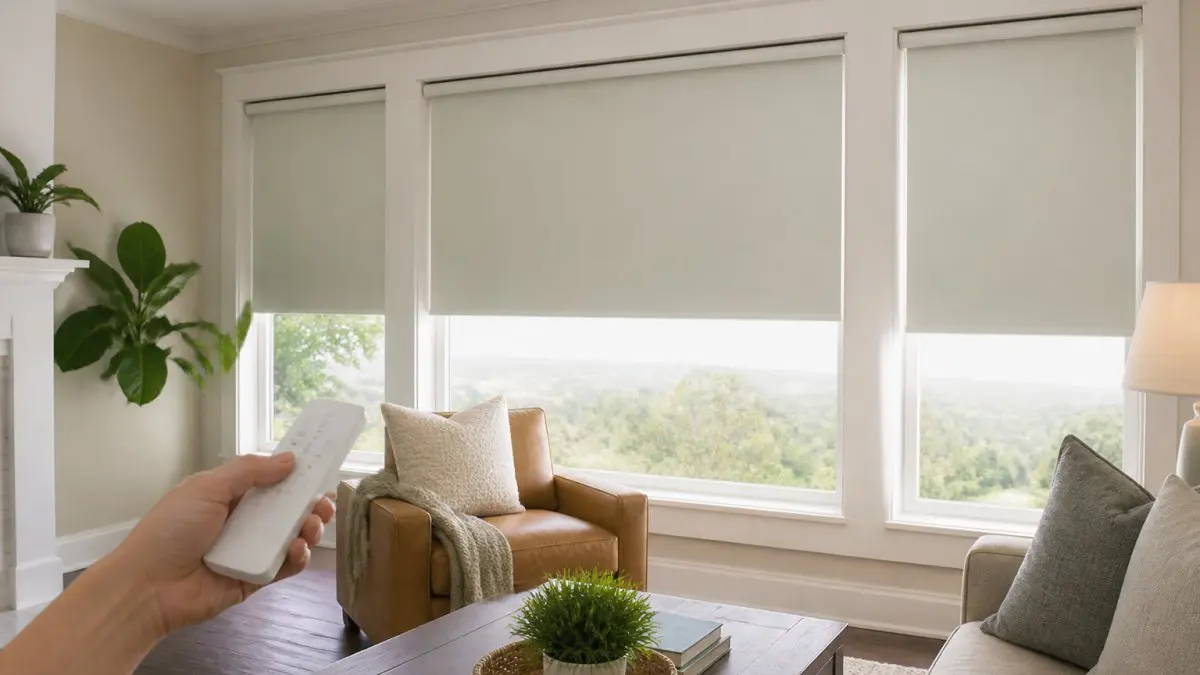
Motorized window shades are worth it for homeowners with hard-to-reach windows, tall glass walls, or a genuine smart-home setup. For everyone else, the math is less obvious.
Motorized shades solve specific problems well: they raise and lower coverings you can’t easily reach, schedule themselves around sunrise and sunset, and trim heat gain on west-facing glass.
We’re Carroll Shade, a family-owned window treatment company serving the Boston and Brookline area since 1932. We install motorized options and repair shades of every kind, so we’ve seen the wins and headaches up close.
Motorized Shades Pros and Cons: What You Actually Gain and Give Up
The core trade-off: you trade upfront money and a power source for daily convenience and control. Whether that’s a good deal depends on which windows you’re covering.
Where Motorized Shades Win: Convenience, Safety, and Hard-to-Reach Windows
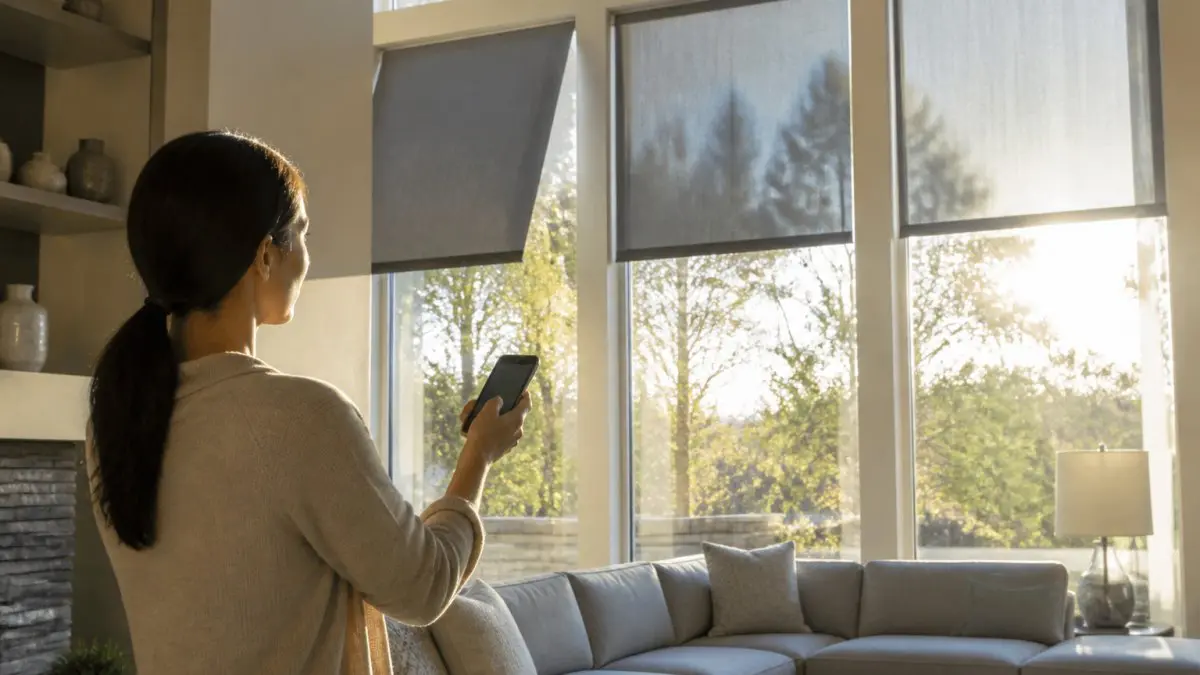
Tall windows, skylights, and second-story glass are where automation earns its keep. A remote, wall switch, or smartphone app means no ladders, no tugging cords, and no leaning over furniture.
Cordless operation also matters for households with young children. The U.S. Consumer Product Safety Commission guidance on window covering cords has long flagged dangling cords as a strangulation hazard, and motorized shades remove that risk entirely.
Add scheduling and the appeal grows: shades open at sunrise, close at dusk, and adjust while you’re away, aiding privacy and a lived-in look.
Where They Fall Short: Upfront Cost, Batteries, and Repair Considerations
The honest drawbacks are cost, power, and service. Motorized shades cost more per window than manual ones, and that gap widens on large or oddly shaped windows.
Battery-powered motors need recharging, and hardwired units need an electrician or nearby outlet. Failures usually mean a motor or control board, so repairs cost more than for manual shades.
Skipping a professional measurement is the most common and most expensive mistake. A fraction of an inch off on a motorized shade can mean light gaps, a binding motor, or a full reorder. Always have windows measured before ordering.
Motorized Shades Cost: What Drives the Price Per Window
Pricing depends on window size, motor type, fabric, and installation complexity. Any quote that ignores your window count and ceiling height is guessing. But the sticker price is only the first line item, the more useful question is total cost over the years you own them, where motorized and manual shades diverge most.
The biggest upfront cost drivers are:
- Window size and shape: Custom sizing for arched or oversized windows adds labor and materials.
- Motor type: Battery-powered motors are simpler to install; hardwired motors cost more upfront but skip recharging.
- Fabric and features: Blackout, light-filtering, and specialty fabrics change the price.
Because every home is different, get a measured quote rather than trusting an online estimate. Carroll Shade provides free in-home consultations so you know the real number before you commit.
Total Cost of Ownership: Where the Money Actually Goes
A motorized shade is not a one-time purchase. Over a typical ownership period you pay for the shade, the motor, the power source, and the service behind it.
| Cost Category | Manual Shades | Motorized Shades |
|---|---|---|
| Purchase price per window | Baseline | Higher, often by a wide margin on large windows |
| Installation | Often DIY or low-cost | Professional measurement and mounting recommended |
| Power | None | Battery replacements or charging, or hardwired electrical work |
| Maintenance | Cord or wand replacement, occasional cleaning | Motor and control-board service, occasional recalibration |
| Repair | Usually inexpensive | Motor or control-board replacement is the common failure point |
| Replacement | Fabric and hardware wear out | Motor lifespan may end before the fabric does |
Patterns worth planning for:
- Battery-powered units carry an ongoing cost in batteries or charging time. Rechargeable packs eventually lose capacity, and reaching high windows to swap or charge them is its own labor cost.
- Hardwired units trade that task for a higher installation bill, especially in retrofits where an electrician runs a circuit.
- Repairs are the biggest surprise. A manual shade failure often means replacing a cord, clutch, or wand. A motorized failure usually means a motor or control board, which cost more and may require a service visit.
The practical takeaway: budget for the shade plus a service reserve. If total cost of ownership over the years you plan to stay looks reasonable against the convenience you gain, the purchase makes sense.
Battery-Powered vs. Hardwired: Installation Cost and Long-Term Tradeoffs
Battery-powered shades install faster because there’s no wiring. The trade-off is recharging: batteries may need a charge a few times a year, and reaching high windows to swap or charge them is its own chore.
Hardwired shades cost more to install but run continuously and suit new construction or renovations where wiring can be planned. For retrofits in older homes, battery power is often the practical choice.
| Factor | Battery-Powered | Hardwired |
|---|---|---|
| Installation | Simpler, no wiring | Needs electrician or outlet |
| Upfront cost | Lower | Higher |
| Ongoing task | Recharge or replace batteries | None |
| Best for | Retrofits, older homes | New builds, renovations |
| High windows | Harder to service | Easier long-term |
Ask for a total cost of ownership estimate, not just a per-window price. A quote that includes expected battery or charging costs, service access, and a realistic repair reserve will tell you far more than the sticker price alone.
Motorized Shades Lifespan: How Long They Last and What Affects Reliability
A well-made motorized shade typically lasts many years, but lifespan depends on motor quality, usage, and maintenance. Cheap motors on oversized shades tend to fail first.
What shortens lifespan:
- Overworking the motor: Heavy blackout fabric on a large window strains a small motor.
- Poor installation: Misaligned brackets cause binding and premature wear.
- No service: Dust, debris, and skipped maintenance shorten motor life.
What extends it: quality components, correct sizing, and a company that stands behind repairs. A common frustration is buying online, having a motor fail, and finding no one to fix it. Local service and a real warranty change that equation.
Ask who services the shade if the motor fails. A warranty is only useful if someone will actually come out and honor it. Local installation and repair support is worth more than a slightly lower online price.
Smart Home Window Shades: Integration, Privacy, and Offline Operation
Smart shades can tie into home automation systems, voice assistants, and apps, but they don’t have to.
That matters for privacy and reliability. A shade controlled by a local remote keeps working when the internet goes down.
A practical middle ground: choose shades with both a physical remote and app control. You get automation when you want it and basic function when you don’t.
Manual vs. Motorized Window Treatments: A Room-by-Room Decision Framework
Not every window needs a motor. Use this framework to decide where automation pays off and where manual shades are the smarter buy.
- Living room, tall or hard-to-reach windows: Motorized. Convenience and safety justify the cost.
- Bedroom: Motorized if you want sunrise scheduling or blackout control without leaving bed.
- Kitchen and bathrooms: Manual often works fine; windows are usually reachable.
The pattern is consistent: automate the windows you struggle to reach or adjust daily. Leave the easy ones manual.
The best value comes from mixing motorized and manual shades in one home. Automate the hard-to-reach and high-use windows, and keep manual shades where they’re simple and cheap.
Energy Savings and Payback: Do Motorized Shades Lower Your Bills?
Motorized shades can help with energy efficiency, but they aren’t a fast payback. The savings come from managing heat gain and heat loss, not the motor itself. The motor’s real contribution is consistency: it runs your schedule every day, including days you’re not home to adjust manual shades.
How the Savings Actually Happen
Two mechanisms do the work:
- Reducing solar heat gain in cooling season. On sun-facing windows, closing shades during peak sun blocks radiant heat before it warms the room. West-facing glass is the classic problem window in the afternoon; east-facing glass is the morning equivalent.
- Limiting heat loss in heating season. Opening shades during the day lets passive solar warmth in, and closing them at night adds a layer between the glass and the room, reducing the chill that radiates off cold windows.
Automated scheduling makes both behaviors consistent. Manual shades only deliver these benefits when someone remembers to adjust them, exactly when the house is empty or the household is busy.
Estimating Payback Without Guessing
No honest installer can promise a specific payback period, because the result depends on your windows, climate, insulation, utility rates, and how you use the shades. What you can do is build a transparent estimate:
- Identify the problem windows. The ones that get direct sun in summer or feel cold in winter are the candidates.
- Estimate the load they represent. A window with single-pane glass, no exterior shading, and full afternoon sun contributes far more to cooling load than a shaded, double-pane window.
- Compare against your utility bills. Look at your summer cooling and winter heating costs and ask what share is plausibly attributable to those windows.
- Apply a conservative reduction. Most practitioners find the savings are modest, not dramatic, and are best treated as a bonus rather than the reason to buy.
The honest conclusion: motorized shades rarely pay for themselves through energy savings alone within a typical ownership period. The return is comfort, glare control, privacy, and convenience, with energy savings as a secondary benefit. If payback is the only thing that makes the purchase make sense, the math is unlikely to cooperate.
Compatibility and Retrofit Constraints: Check Before You Buy
Before assuming a window can be automated, confirm the constraints that turn a straightforward purchase into a custom project:
- Window dimensions and mounting depth. Motorized shades need room for the motor, tube, and brackets. Shallow depths, tight frames, and inset windows can rule out certain products.
- Existing treatments. If you already have blinds, shutters, or valances, the new shade may not fit without removing or modifying what’s there.
- Wiring access. Hardwired shades need a power source. In a finished wall with no nearby outlet, that means an electrician, drywall work, and a higher bill. Battery power avoids wiring but adds recharging.
A professional measurement is the fastest way to surface these constraints, far cheaper to learn a window is a poor candidate before you order than after.
Do not assume every window in the house can be automated the same way. Mounting depth, wiring access, and existing treatments vary from room to room, and the windows that look easiest are sometimes the ones with the tightest constraints.
Treat energy savings as a bonus, not the business case. The strongest justification for motorized shades is solving a real problem: windows you cannot reach, glare you fight daily, or a schedule you want handled automatically.
Conclusion: When Motorized Window Shades Are Worth the Investment
The honest answer: motorized window shades are worth it when they solve a real problem, like windows you can’t reach, glare you fight daily, or a home you want to automate.
If you’re weighing the decision, start with a professional measurement and a clear quote for your actual windows. Carroll Shade has served the area since 1932 as an authorized Hunter Douglas partner, offering customized designs, expert installation, and reliable repair services for motorized and manual shades alike.
Frequently Asked Questions
What are the downsides of motorized window shades?
The main drawbacks are higher upfront cost per window, dependence on battery or wiring, and potential repair complexity if a motor fails. Battery-powered models need periodic recharging, and hardwired models require an electrician or accessible wiring during installation. Operating noise and motor replacement cost also factor in. For hard-to-reach or tall windows, though, the convenience often outweighs these downsides. Weigh the tradeoffs against how often you actually adjust your window coverings daily.
What is the average lifespan of motorized window shades?
Most quality motorized window shades last 10 to 15 years with regular use, depending on motor quality, usage frequency, and installation conditions. Rechargeable battery life typically runs several months to a year per charge, while hardwired motors avoid that concern entirely. Warranties vary by manufacturer, so check coverage on both the motor and the shade fabric. Proper installation and avoiding excessive strain on the motor help extend lifespan.
Are motorized shades more energy efficient than manual shades?
Motorized shades can improve energy efficiency when paired with scheduling or smart-home routines that close them during peak sun hours and open them for passive warmth. The shades themselves perform similarly to manual versions of the same fabric and fit, so the real gain comes from consistent, automated positioning. Light-filtering and blackout shades both help reduce heat gain and heat loss when used strategically. Actual savings depend on window orientation, climate, and existing insulation.
Can motorized shades work with smart home systems?
Yes, most modern smart home window shades integrate with platforms like Amazon Alexa, Google Home, and Apple HomeKit, plus dedicated smartphone apps for scheduling and remote control. Many also support automation routines, timers, and voice control. Some systems allow offline operation via a wall switch or remote if Wi-Fi goes down. Check compatibility before buying, since older or budget motors may only support a proprietary remote without smart-home integration.
Deciding which windows to automate is easier with expert eyes on your home. Carroll Shade offers custom motorized window treatments, professional installation, and dependable repair service backed by decades of local experience. Get started with Carroll Shade and get window treatments designed for how you actually live.
