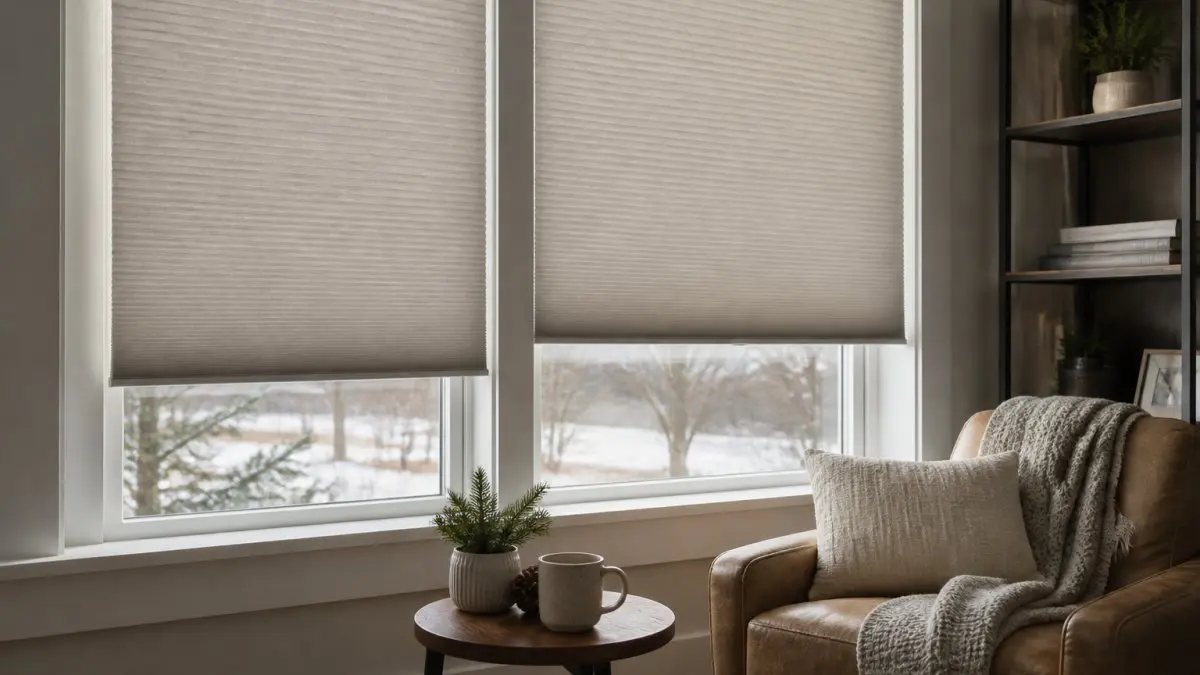
Reduce Heating Bills With Window Shades
Table of Contents
- How Window Shades Affect Your Heating Bills
- Cellular Window Shades and Their Insulating Properties
- Best Shades for Winter Performance
- How to Insulate Windows for Winter With Shades
- Energy-Efficient Window Treatments and Seasonal Strategy
- Comparing Window Shades, Blinds, Curtains, and Drapes
- Measuring, Fitting, and Installing Shades to Prevent Drafts
- Prioritizing Your Windows for Maximum Savings
- Frequently Asked Questions
Last Updated: October 11, 2026
How Window Shades Affect Your Heating Bills
You can reduce heating bills with window shades, which reduce heat loss through windows, one of the biggest sources of heat escape in most homes. Proper window treatments act as an insulating barrier between your living space and the cold outside.
Shades create a layer of trapped air between the window and your room, slowing heat transfer significantly. Different shade types trap air differently, which is why some perform better than others for heating season.
The right window treatments reduce workload on your heating system, lowering energy bills.
Here’s what matters most: shades work best when they fit snugly in the window frame with minimal gaps around edges. Loose-fitting treatments let warm air escape around the sides. Tight installation is where real savings happen.
Cellular Window Shades and Their Insulating Properties
Cellular shades are the most effective window treatment for reducing heating bills. These shades feature hollow cells that trap air, creating multiple insulating layers. The more cells, the better the insulation. Single-cell shades offer basic protection. Dual-cell shades provide significantly better thermal performance.
The air pockets inside cellular shades slow heat loss dramatically compared to flat blinds or thin curtains.
Installation quality matters, gaps around edges reduce effectiveness. Tight installation eliminates edge leaks and maximizes insulating properties.
Choose honeycomb shades with a backing material if your windows face extreme cold. The backing layer adds another thermal barrier and prevents condensation on glass.
Best Shades for Winter Performance
Cellular shades outperform blinds and basic roller shades for winter insulation. Vertical cellular shades work well for sliding glass doors and large windows; horizontal cellular shades suit standard windows.
Shades with blackout or room-darkening linings add thermal resistance and block drafts more effectively than translucent fabrics.
Motorized cellular shades can be programmed to close automatically at sunset and open during sunny mornings, ensuring consistent operation.
Thin vinyl blinds provide minimal insulation. Cellular shades deliver superior performance in a more compact package than heavy drapes.
How to Insulate Windows for Winter With Shades
A room-by-room schedule tailored to sun exposure and occupancy ensures shades deliver maximum impact.
Room-by-Room Winter Operating Schedule
South-facing windows (living rooms, kitchens, home offices):
Open shades fully between 9 a.m. and 4 p.m. on clear days. South-facing glass captures the most winter solar heat, and even weak sunlight reduces furnace workload. Close shades at 4 p.m. or at sunset, whichever comes first.
North-facing windows (bathrooms, hallways, utility areas):
Keep shades closed from dusk through mid-morning. North-facing glass receives almost no solar heat in winter and is a net heat-loss point throughout daylight. Opening them provides minimal benefit.
East-facing windows (bedrooms, breakfast areas):
Open shades at sunrise to capture morning solar heat and provide natural light. Close them by noon.
West-facing windows (living rooms, dens):
Keep shades closed until 2 p.m. to prevent unwanted afternoon heat gain (which can overheat rooms and trigger cooling). Open them from 2 p.m. to sunset to capture late-day solar heat. Close at sunset. This timing balances winter heating gain with comfort.
Bedrooms (all orientations):
Close shades at bedtime and keep them closed until morning. You spend 8+ hours per night in bedrooms with doors typically closed, making them isolated thermal zones. Closed shades during sleep hours reduce heat loss from these spaces significantly.
Timing Adjustments for Cloudy Days and Extreme Cold
On heavily overcast days, keep shades closed all day. On days below 0°F, close all shades by 3 p.m. to prevent accelerated heat loss.
Decision Framework: When to Override the Schedule
Keep shades closed in unoccupied rooms. If working from home in a north-facing room, prioritize natural light and compensate by closing shades aggressively at night. Automate the schedule with motorized shades if available.
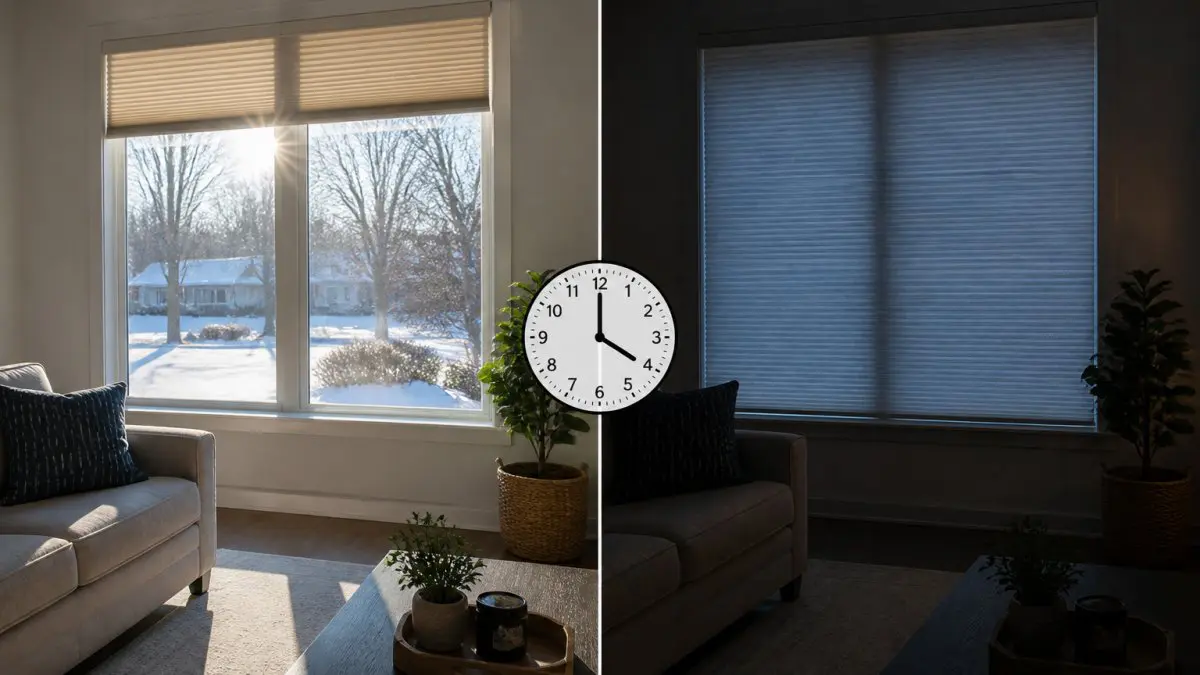
The difference between casual shade use and optimized use is 10-15% in heating savings. A consistent schedule, not just closing shades randomly, trains your home’s thermal behavior and ensures every window works for you rather than against you.
Energy-Efficient Window Treatments and Seasonal Strategy
Savings vary widely depending on climate, window type, and occupancy. Understanding these factors helps set realistic expectations.
Why Savings Vary: The Key Factors
Climate: Cold climates see larger percentage savings (10-15%) because heating periods are longer. Mild climates see smaller savings (3-5%).
Window type: Shades are most effective on single-pane windows (12-18% savings). Triple-pane windows see smaller gains (2-4%) because they already perform well.
Window area and orientation: Large south-facing windows benefit more from day-open, night-closed strategies. North-facing windows see smaller returns.
Existing coverings: Replacing thin blinds with cellular shades yields larger savings than replacing thermal drapes.
Occupancy: Homes where occupants are present during the day benefit more from solar-gain strategies.
Estimating Your Potential Savings
Most homes spend 40-50% of winter energy costs on heating. Windows account for 25-30% of total home heat loss.
Example 1: Cold climate, single-pane windows, occupied during day
- Annual heating bill: $1,800
- Heating portion: $1,440 (80% of bill in a cold climate)
- Window heat loss: ~$360-$432 (25-30% of heating cost)
- Potential savings with comprehensive cellular shades and optimized daily use: 30-40% of window losses = $108-$173 per year
- Payback period for $400 shade installation: 2.3-3.7 years
Example 2: Moderate climate, double-pane windows, unoccupied during day
- Annual heating bill: $900
- Heating portion: $720 (80% of bill)
- Window heat loss: ~$180-$216 (25-30% of heating cost)
- Potential savings with cellular shades: 15-20% of window losses (smaller gain because windows are already efficient and home is unoccupied during peak solar hours) = $27-$43 per year
- Payback period for $400 shade installation: 9-15 years
Transparent Expectations: Laboratory vs. Real-World Performance
Manufacturers often cite laboratory R-values (thermal resistance ratings) for cellular shades, claiming R-values of 3 to 5 or higher. These values are measured in controlled conditions with perfect installation and no air leakage around edges. In real homes, actual performance is typically 40-60% of laboratory values because edge gaps, imperfect fit, and air movement reduce effectiveness. A shade rated R-3.5 in the lab typically delivers R-1.4 to R-2.1 in practice.
This doesn’t mean shades don’t work, it means the savings estimates above are more realistic than manufacturer claims. A well-installed shade with tight edge sealing and consistent daily use approaches the higher end of real-world performance.
Layering Treatments for Incremental Gains
Adding thermal curtains behind cellular shades increases insulation further. Each layer adds roughly 10-20% additional thermal resistance. If cellular shades alone deliver $100 in annual savings, adding thermal curtains might increase that to $110-$120. The incremental gain is modest but meaningful over time, and layering is most cost-effective in very cold climates or on the home’s largest windows.
Prioritization Strategy Based on Payback
Focus first on the windows that will pay back fastest:
- Largest windows with the poorest glazing (single-pane picture windows, older sliding glass doors)
- South-facing windows in cold climates (highest solar heat gain potential)
- Bedrooms and frequently occupied rooms (where consistent daily use is easiest to maintain)
- Windows in rooms you heat aggressively (higher setpoint = larger savings per window)
Defer treatment of small north-facing windows, already-efficient triple-pane windows, and rooms you rarely occupy. The payback period on those windows may exceed 10 years, making the investment less attractive.
Don’t rely on broad percentage claims like “reduce heating bills by 15%.” Your actual savings depend on climate, window type, occupancy, and installation quality. Use the framework above to estimate your specific situation, and prioritize windows where payback is fastest.
Comparing Window Shades, Blinds, Curtains, and Drapes
| Treatment Type | Insulation Quality | Best For | Ease of Use |
|---|---|---|---|
| Cellular Shades | Excellent | Winter heating | Daily opening/closing |
| Thermal Curtains | Good | Layered insulation | Heavier, harder to operate |
| Vinyl Blinds | Fair | Light control only | Easy but minimal thermal benefit |
| Roller Shades | Fair | General coverage | Simple operation |
| Drapes | Good | Aesthetic appeal plus insulation | Dust collection, dry cleaning needed |
Cellular shades rank highest for pure thermal performance. They’re purpose-built for insulation. Thermal curtains add value but weigh more and require heavier hardware. Vinyl blinds and basic roller shades prioritize affordability over heating efficiency.
Drapes offer moderate insulation and visual appeal. Heavy fabric drapes work better than light curtains. However, drapes collect dust and require regular cleaning, which some homeowners find inconvenient.
For most homes seeking to reduce heating bills with window shades, cellular shades deliver the best balance of performance, durability, and daily usability.
Measuring, Fitting, and Installing Shades to Prevent Drafts
Proper installation eliminates edge gaps that waste heat. Measure windows accurately before ordering. Inside-mount shades fit within the window frame. Outside-mount shades mount on the wall above and beside the frame.
Inside-mount shades provide cleaner appearance but require precise measurements. If measurements are off by even half an inch, gaps appear around edges. Outside-mount shades tolerate slight measurement errors and cover more wall area, which blocks more drafts.
Fit shades snugly against the window frame. No daylight should show around edges when shades are closed. Seal any remaining gaps with weatherstripping or caulk. Small gaps seem harmless but accumulate into significant heat loss.
Install shades securely so they don’t rattle in wind. Loose shades vibrate and allow air movement around the edges. Professional installation ensures proper mounting and eliminates these problems.
Improper installation negates most thermal benefits. A shade that fits loosely wastes as much heat as having no shade at all. Invest in professional installation to ensure edge sealing and secure mounting.
Prioritizing Your Windows for Maximum Savings
Start with your largest windows. Big windows mean bigger heat loss. A large picture window loses far more heat than a small bathroom window. Prioritize treatments for your home’s largest glass areas first.
Focus on windows that face north and west. These exposures receive minimal solar heat in winter. Covering them prevents maximum heat loss. South-facing windows benefit from solar gain, so full coverage isn’t always ideal there.
Bedrooms deserve priority during heating season. You spend eight hours per night in bedrooms with doors closed. Heating these spaces efficiently through window shades reduces overall heating demand. Closed bedroom shades at night keep those rooms warm while you sleep.
Consider climate when prioritizing. Homes in cold climates benefit more from aggressive window treatment strategies. Mild climates see smaller returns on investment. In harsh winters, quality shades pay for themselves quickly.
Reducing heating bills doesn’t require expensive upgrades to your heating system. Window shades address one of the biggest sources of heat loss in your home. With motorized options available for hard-to-reach windows, we make it simple to maintain the daily rhythm that maximizes savings. Contact Carroll Shade to discuss which window treatments will work best for your home’s specific layout and heating needs.
Frequently Asked Questions
Do window shades actually help reduce heating bills?
Yes. Window shades reduce heating bills by minimizing heat loss through windows, which account for a significant portion of home heat transfer. Cellular shades with insulating air pockets are particularly effective. The actual savings depend on your climate, window condition, home size, and how consistently you use the shades, closing them at night and opening them on sunny winter days maximizes the benefit. Most homeowners see measurable reductions in their heating system workload.
What type of window shades are best for keeping heat in during winter?
Cellular or honeycomb shades are the best choice for winter insulation because their air pockets trap heat and reduce thermal transfer. Double-cell shades perform better than single-cell. Blackout shades also provide insulation, though cellular shades are specifically designed for this purpose. Motorized options let you automate the process, closing shades at night and opening them on sunny days without manual effort, which is especially useful for hard-to-reach windows.
How should I use window shades seasonally to reduce heating costs?
In winter, close your shades at night to trap heat inside and reduce heat loss. Open them during the day when the sun is shining to allow solar heat gain. On cloudy days or nights, keep shades closed. In summer, reverse this strategy: keep shades closed during the day to block heat gain and reduce cooling costs. This seasonal approach, combined with proper fit and installation to eliminate edge gaps, delivers the most consistent savings on your heating bills.
Are cellular shades effective at insulating windows compared to other options?
Cellular shades outperform standard vinyl blinds and lightweight curtains for insulation because their honeycomb structure creates air pockets that resist heat transfer. Thermal drapes offer some insulation but are less efficient than cellular shades. The effectiveness depends on proper installation, gaps around edges allow warm air to escape, reducing performance. Custom-fitted cellular shades with motorized automation provide the best results for reducing heating bills over the long term.
