Cellular vs Solar Shades for Boston Homes
Last Updated: October 28, 2026
Quick Summary
Cellular window shades are fabric shades built from honeycomb-shaped cells that trap air, which improves insulation and light control. Solar shades use a woven screen to cut glare and heat while keeping an outside view. Cellular shades suit comfort and privacy needs, while solar shades suit glare and view.
- Single-cell shades have one row of cells, the slimmest profile and the lowest cost.
- Double-cell shades create two trapped air pockets, improving insulation for large or older windows.
- Experimental testing found daily heating-energy savings of 17%-36% with cellular shades versus no shades.
- Blackout cellular shades suit bedrooms and media rooms, while light-filtering fabric gives softer light.
- Confirm stack height before ordering, since triple-cell shades stack tallest on tight windows.
Table of Contents
- Cellular Window Shades vs. Solar Shades: How They Differ
- Single-Cell vs. Double-Cell Shades: Which Construction Fits Your Windows
- Energy-Efficient Window Shades: What the Research Shows
- Blackout Cellular Shades: Light Control for Bedrooms and Media Rooms
- Custom Sizing, Arched Windows and Motorized Options
- Cost, Cleaning and Repair: Total Ownership by Window Type
- Scheduling Your Measurement and Choosing the Right Shade for Your Home
- Frequently Asked Questions
Cellular window shades trap air in honeycomb-shaped cells, and that simple structure does more work than most homeowners expect. For Boston-area homes with drafty older windows, the choice of shade can affect comfort, light control and energy use. Carroll Shade is a family-owned business serving the Boston and Brookline areas since 1932. The U.S. Department of Energy reports that installing window attachments can save 15% of a household’s annual HVAC energy use compared with vinyl blinds (U.S. Department of Energy fact sheet on cellular shades). Below, we compare cellular shades with solar shades and explain where each one fits.
Cellular Window Shades vs. Solar Shades: How They Differ
Cellular window shades are fabric shades built from pleated cells that trap air. Solar shades use a woven screen to reduce glare and heat while keeping an outside view. The two solve different problems, so the right choice starts with what you need from the window.
Cellular shades handle insulation and light control well. Solar shades handle heat and glare reduction while keeping the view. Many homeowners in older Boston homes want both comfort and privacy, which is why the choice is rarely simple.
Single-Cell vs. Double-Cell Shades: Which Construction Fits Your Windows
Cell construction is the single biggest driver of how a cellular shade performs, looks, and costs. The three common configurations are single-cell, double-cell, and triple-cell, and each trades off insulation, stack height, appearance, and price in a predictable way.
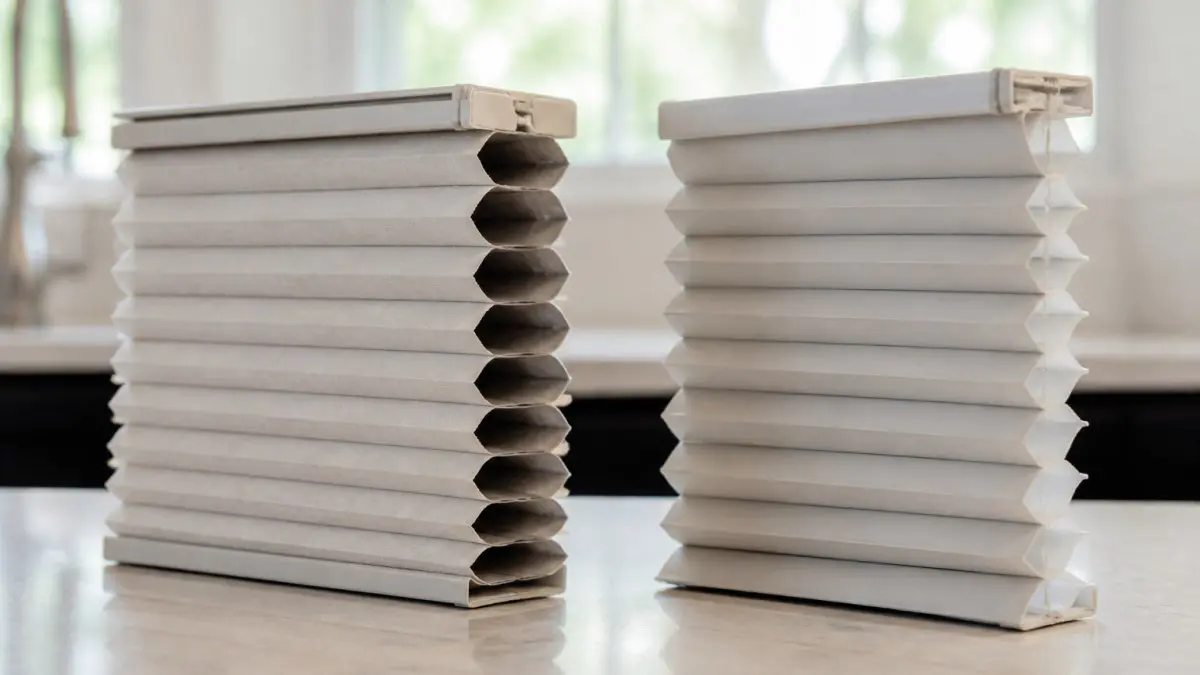
Single-cell shades have one row of honeycomb cells. They are the slimmest profile, stack into the smallest space when raised, and cost the least of the three. A single-cell shade is a good fit for windows where you mainly want light diffusion and privacy, or where the window is recessed and you cannot spare stack height. Insulation is modest compared with multi-cell designs.
Double-cell shades stack two rows of cells, creating two trapped air pockets instead of one. That extra air layer is what improves insulation and helps reduce heat loss in winter and heat gain in summer. Double-cell shades are thicker, stack taller when raised, and cost more than single-cell. They make the most sense on large, exposed windows, older single-pane windows, and rooms where drafts are a real comfort problem.
Triple-cell shades add a third row for the highest insulation in the category. They are the thickest, stack the tallest, and carry the highest price. Triple-cell construction is usually reserved for extreme exposures or homeowners who prioritize thermal performance over a low-profile look.
Cell Sizes and Stack Height Compared
Cell size is separate from cell count. Common honeycomb cell sizes run roughly 3/8 inch, 1/2 inch, 3/4 inch, and 1 inch (often described as 9 mm, 13 mm, 19 mm, and 25 mm). Smaller cells give a finer, more tailored look and a tighter stack; larger cells give a bolder look and can cover more window area with fewer pleats. Cell size does not change insulation as much as cell count does, but it does change appearance and stack height.
Stack height, the space the shade occupies when fully raised, matters most on tall windows, doors, and tight recesses. As a rule of thumb, a double-cell shade stacks taller than a single-cell shade of the same size, and a triple-cell stacks taller still. On a tall window, that difference can determine whether the shade clears a door frame or blocks part of the glass even when raised.
Choose single-cell for a slim profile and lower cost, double-cell for the best balance of insulation and value on most windows, and triple-cell only when maximum insulation justifies the extra thickness and price. Confirm stack height before ordering on any window where clearance is tight.
A practical way to decide: match cell count to the window’s exposure and the room’s comfort needs, then match cell size to the look you want. A double-cell shade in a 3/4-inch cell is a common middle ground for living rooms and bedrooms, while a single-cell 3/8-inch shade suits a bathroom or a window where a low-profile stack is the priority.
The table below summarises the three cell constructions covered in this section.
| Construction | Best for | Key difference |
|---|---|---|
| Single-cell | Light diffusion, privacy, recessed windows | One row of cells; slimmest profile and lowest cost |
| Double-cell | Large, exposed or older windows | Two air layers; better insulation and value |
| Triple-cell | Extreme exposures, maximum insulation | Three rows; thickest, tallest stack and highest price |
Energy-Efficient Window Shades: What the Research Shows
Energy performance is where cellular shades earn their reputation. Experimental testing found daily heating-energy savings of 17%-36% with cellular shades compared with no shades (Energy and Buildings study on national energy savings potential of cellular shades). Energy savings vary with the home, the window and the season, so treat these figures as a range rather than a promise.
Blackout Cellular Shades: Light Control for Bedrooms and Media Rooms
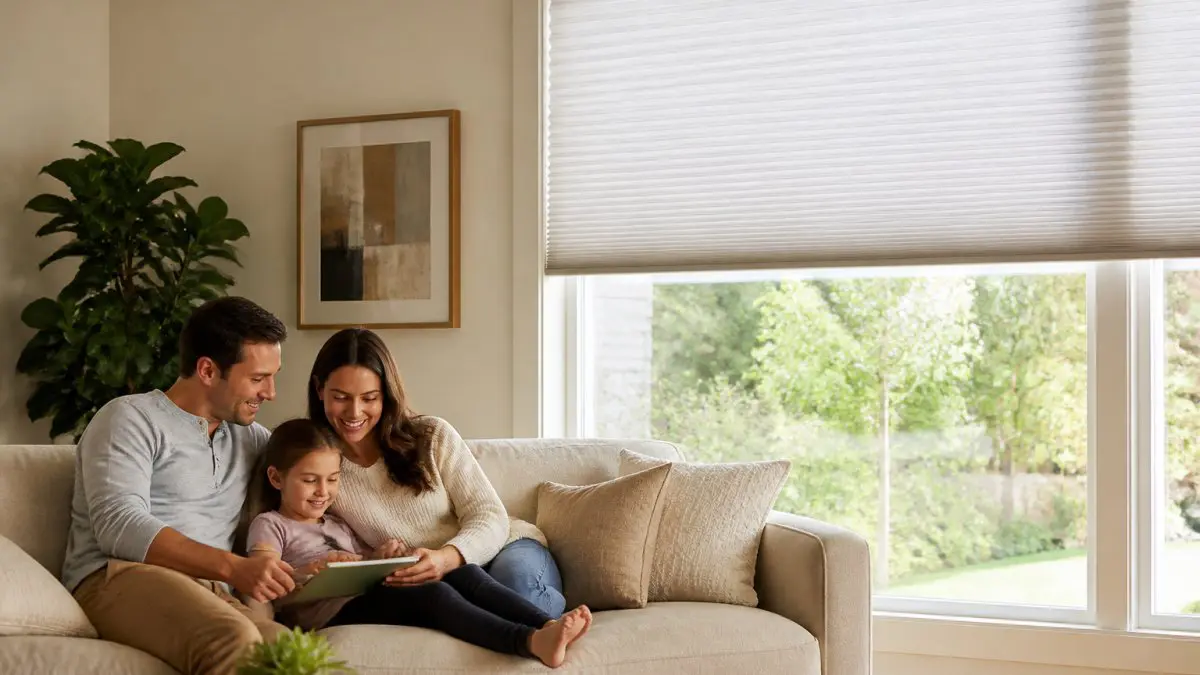
Blackout cellular shades block nearly all outside light, which suits bedrooms, nurseries and media rooms. The same cell structure that insulates also helps block light and reduce noise.
Choose blackout fabric for rooms where you need darkness during the day. Choose a light-filtering fabric where you want softer light and a visible view.
Custom Sizing, Arched Windows and Motorized Options
Motorized window treatment options can help with hard-to-reach windows.
Ask Carroll Shade for a quote. Motorized window treatment options are available.
Cost, Cleaning and Repair: Total Ownership by Window Type
Most shoppers compare cellular shades on the sticker price of the shade itself, but the real cost of ownership includes sizing, operating system, installation, and long-term care. Breaking those apart makes it easier to compare quotes that look different but cover different things.
What Drives the Price of a Cellular Shade
As one published example, Factory Direct Blinds lists custom cellular shades starting in a range of $55.99 to $119.99 per shade, varying with those specifications (Factory Direct Blinds guide to cellular shade costs). Treat that as one retailer’s starting range, not a quote for your windows, a large blackout double-cell motorized shade will sit well above the low end.
Total Cost of Ownership: What to Compare Beyond the Shade Price
A shade that costs a little more up front but includes measurement, installation, and a strong warranty can be the lower total cost over its life.
Cleaning and Maintenance
Cellular shades are low-maintenance but not maintenance-free. Dust settles in the honeycomb cells, so a soft brush or a vacuum with a brush attachment on low suction is the standard routine. For deeper cleaning, follow the fabric manufacturer’s instructions, some fabrics can be spot-cleaned, while others should be professionally cleaned. Avoid soaking the cells, since trapped moisture can damage the fabric and the cell structure.
Repair: What Usually Fails and What to Ask
The parts most likely to need attention over time are the lift cords, the cord lock or lift mechanism, and, on motorized units, the motor and battery. Before you buy, ask any provider how repairs are handled, whether replacement parts are available, and whether service is in-home or requires removing the shade. That conversation is easier before the sale than after.
Ownership by Window Type
Different windows put different demands on a shade, which changes both the right product and the ownership picture:
- Bedrooms. Blackout double-cell shades are common for light control and insulation; cordless operation is the safety baseline.
- Bathrooms. Humidity is the main concern, so choose a fabric rated for damp rooms and favor a slim single-cell or a shade that can be easily cleaned.
Scheduling Your Measurement and Choosing the Right Shade for Your Home
Reach out to our team to schedule a measurement. Contact Carroll Shade for a measurement and a recommendation for your windows. If you want to explore custom sizing and motorized options first, see our window installation and repair services.
Frequently Asked Questions
What are the drawbacks of cellular shades?
Request a quote from Carroll Shade for current pricing before deciding.
What’s the difference between honeycomb shades and cellular shades?
The two names generally describe the same product. The term cellular is more common in the industry.
Are solar shades or cellular shades better?
Cellular shades and solar shades are options to consider for window treatments.
Should I choose single-cell or double-cell cellular shades?
Ask Carroll Shade to walk through the options for your specific windows.

