Best Blinds for Large Oversized Windows: A Buying Guide
Last Updated: November 17, 2026
Quick Summary
The best blinds for large oversized windows are chosen by matching the material to the span, since wide windows punish heavy treatments and reward lightweight ones. Vertical blinds suit wide spans and sliding doors on a budget, cellular shades add insulation, and motorized roller shades handle tall glass you cannot reach.
- Vertical blinds often cover 120 to 192 inches per headrail because slats hang rather than cantilever.
- Specify a heavy-duty tube and reinforced bracket for roller shades, since a standard roller sags on wide spans.
- Measure width at the top, middle, and bottom of the window and use the narrowest figure.
- Split a window into two panels when a single blind would exceed the manufacturer’s maximum width.
- Match the motor rating to the weight and width of the treatment, because cheap motors fail on heavy panels.
Table of Contents
- Quick Comparison: Best Blinds for Large Oversized Windows
- Vertical Blinds for Large Windows: Budget-Friendly Wide-Span Coverage
- Roller Shades for Large Windows: Clean Lines and Easy Operation
- Cellular and Honeycomb Shades: Lightweight Insulation for Big Glass
- Wood, Faux Wood, and Aluminum Mini Blinds Compared
- 120 Inch Wide Blinds: Span Limits and When to Split a Window
- Motorized Blinds for Hard-to-Reach and Oversized Windows
- Large Window Blinds for Living Room: Matching Style to the Space
- Frequently Asked Questions
Quick Comparison: Best Blinds for Large Oversized Windows
Finding the best blinds for large oversized windows comes down to matching the material to the span. Wide windows punish heavy treatments and reward lightweight ones, so the right pick depends on width, height, and how you plan to reach the controls. At Carroll Shade, we’ve served the Boston and Brookline area since 1932. Vertical blinds are often a budget-friendly choice for wide coverage, cellular shades are known for insulation, and motorized roller shades suit tall glass you can’t reach.
Here’s the short version before the detail:
| Treatment | Best For | Watch Out For |
|---|---|---|
| Vertical blinds | Wide spans, patio doors, budget | Less cozy look in living rooms |
| Roller shades | Clean lines, easy operation | Can feel plain without a valance |
| Cellular shades | Insulation, lightweight spans | Higher cost per window |
| Wood and faux wood | Warm traditional style | Weight on very wide windows |
| Aluminum mini blinds | Tight budgets | Lightweight, less durable |
| Motorized treatments | Tall or hard-to-reach glass | Power and wiring planning |
The quick comparison above covers the main trade-offs. Below, we break down each option by span, operation, and room.
Vertical Blinds for Large Windows: Budget-Friendly Wide-Span Coverage
Vertical blinds are often considered a cost-effective way to cover a wide span, and they handle oversized openings well. Slats run top to bottom and glide side to side, so a single headrail can cover a patio door or a wall of glass without sagging.
3 Day Blinds guide to blinds for large windows lists vertical blinds among the top choices for wide windows, alongside roller, cellular, and wood options. The appeal is simple: wide-window coverage without the weight problem that plagues horizontal blinds.
Where vertical blinds fall short is style. In a formal living room they can read as office-like. For a den, patio door, or sliding glass door, they’re hard to beat on value.
Best for: wide spans, sliding doors, and shoppers watching the budget.
Skip if: you want a soft, tailored look in a main living space.
Roller Shades for Large Windows: Clean Lines and Easy Operation
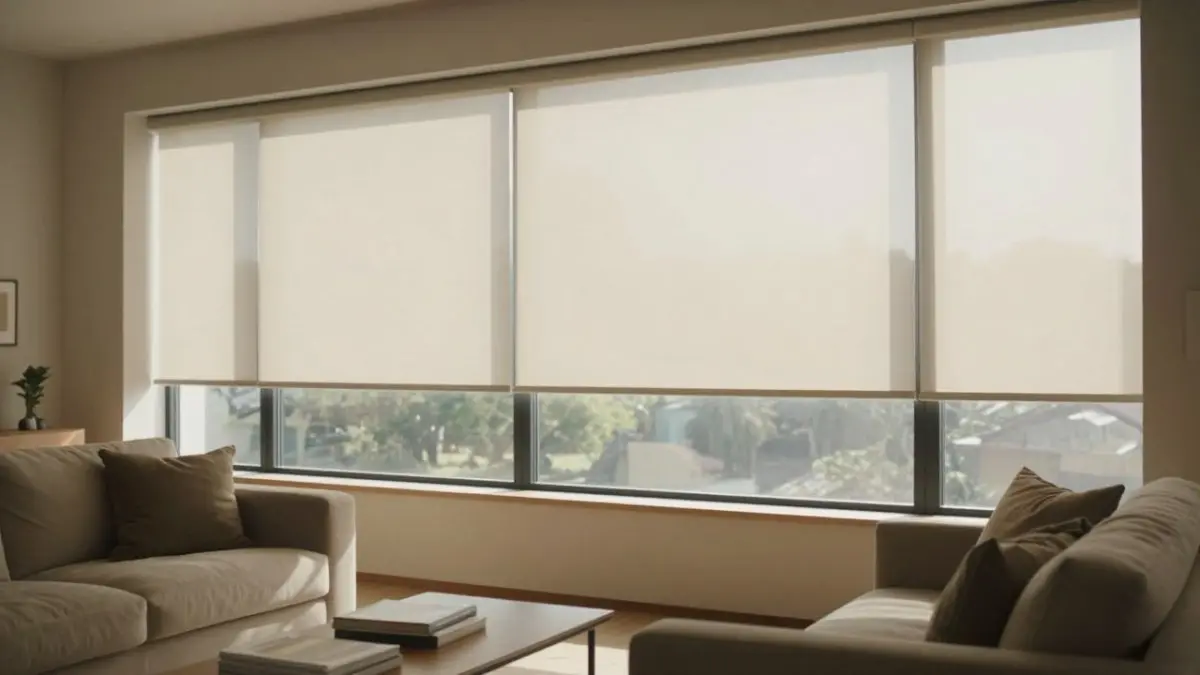
Roller shades for large windows deliver the cleanest sightlines of any treatment. A single panel rolls up into a compact cassette, so a wide window keeps its view instead of being sliced into slats.
Operation is the selling point. One pull or one motor handles a full panel, which matters on tall glass. The trade-off is that a bare roller shade can look plain. A fabric valance or a layered sheer drapery softens it.
For oversized windows, specify a heavy-duty tube and a reinforced bracket. A standard roller on a very wide span will sag in the middle over time. Custom sizing avoids that.
Best for: modern rooms, tall windows, and anyone who wants minimal hardware.
Skip if: you need deep insulation or a traditional look.
Cellular and Honeycomb Shades: Lightweight Insulation for Big Glass
Cellular shades, also called honeycomb shades, are a common choice for insulation on large windows. Their honeycomb cells trap air, which can help with thermal insulation on big panes.
The other advantage is weight. Cellular shades are extremely lightweight, so they suit wide spans where a heavy wood blind would strain the headrail. That combination of light build and insulation is why they perform well on expanses of glass.
Pricing depends on the size, material, and configuration of your windows, so contact Carroll Shade or visit our website for a current quote.
Best for: cold rooms, west-facing glass, and wide spans needing insulation.
Skip if: budget is the deciding factor.
Wood, Faux Wood, and Aluminum Mini Blinds Compared
Wood blinds bring warmth and a traditional look that suits older homes. Faux wood costs less and resists moisture, which makes it a practical pick for humid rooms. Both share one weakness on very wide windows: weight.
Blinds Galore’s large window treatment guide flags faux wood as cost-effective for large windows but cautions that weight can become an issue on very wide spans. Past a certain width, the slats and headrail strain the mounting.
Aluminum mini blinds sit at the budget end. They’re light and inexpensive, which helps on wide openings, but they dent and feel less durable over time.
| Material | Cost | Weight on Wide Spans | Best Room |
|---|---|---|---|
| Real wood | High | Heavy | Living room, study |
| Faux wood | Moderate | Heavy | Kitchen, bath |
| Aluminum mini | Low | Light | Rental, utility |
Best for: traditional interiors and moisture-prone rooms (faux wood).
Skip if: your window is extra-wide and you want a single unsplit treatment.
120 Inch Wide Blinds: Span Limits and When to Split a Window
The practical width limit for a single blind depends on the material and product line, so check the manufacturer’s published maximum width before choosing a treatment for an oversized opening.
Here is the pattern most practitioners find across common materials:
| Material | Typical single-unit max width | Why it stops there |
|---|---|---|
| Aluminum mini blinds | Around 72-96 inches | Light slats and a slim headrail flex and sag past this |
| Real wood and faux wood | Around 96-120 inches | Slat weight and headrail strain pull the mounting |
| Vertical blinds | Often 120-192 inches per headrail | Slats hang rather than cantilever, so width is less punishing |
| Roller shades | Around 96-120 inches on a heavy-duty tube | Fabric weight and tube deflection cause a middle sag |
| Cellular shades | Around 96-120 inches | Light build helps, but wide cells can bow |
Those ranges are starting points, not guarantees. A manufacturer’s published maximum for the exact fabric, slat, and headrail you are buying is the number that matters, and it can shift by product line.
When to split a window. The rule we use: if a single blind would exceed the manufacturer’s maximum width for that material, split it. Two narrower panels on one wide window look intentional when the split lands on a mullion or frame line.
Measuring and mounting for oversized openings. Measure the width at the top, middle, and bottom of the window and use the narrowest figure; large openings are rarely perfectly square.
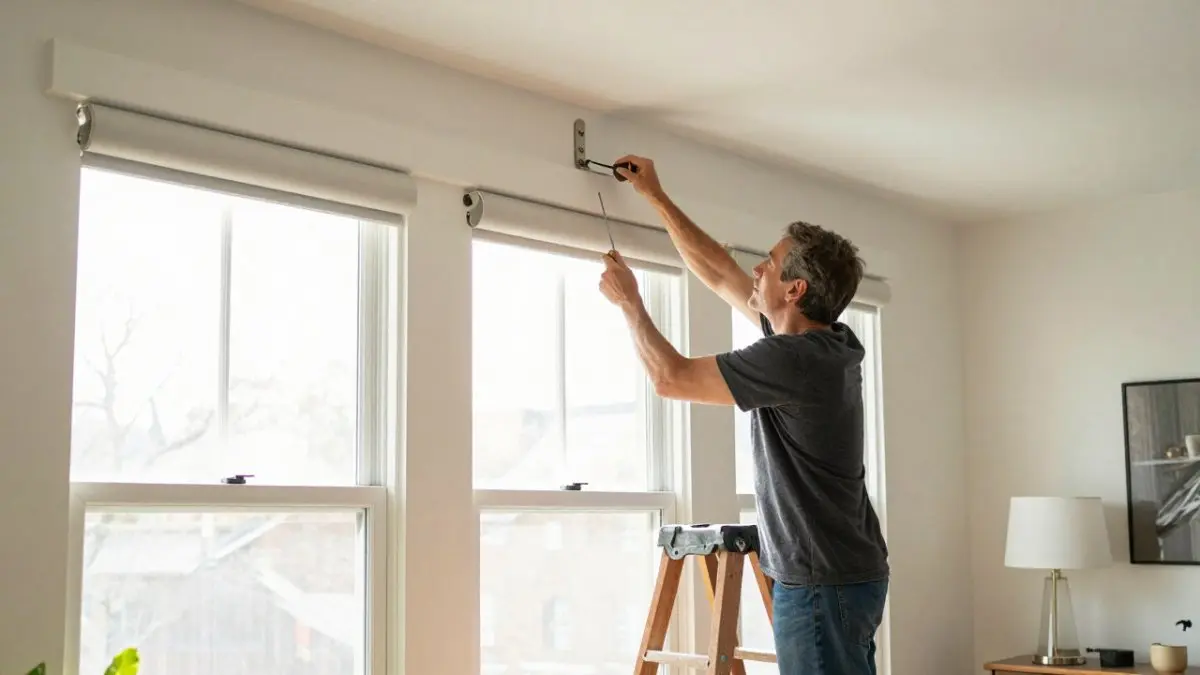
Mounting is an important consideration for large windows. Wide headrails may need additional brackets, and brackets should be anchored to solid framing or a properly anchored backing. On tall glass, plan how the headrail will be reached for installation and service.
Best for: extra-wide windows where a split treatment is planned from the start.
Skip if: you’re set on one seamless panel past the material’s limit.
Motorized Blinds for Hard-to-Reach and Oversized Windows
Motorized blinds can make tall or hard-to-reach windows easier to control. On such glass, a remote, a wall switch, or a phone app can replace a cord you can’t reach safely.
Power options. Three paths dominate, and each fits a different window:
- Battery. The most common retrofit choice because it needs no wiring. Motors run on removable battery packs or rechargeable lithium cells, and battery life depends on the size of the treatment and how often it moves, large, heavy panels draw more. Changing or recharging batteries on a two-story window is its own reach problem, so plan access.
- Hardwired. The most reliable for heavy panels and the cleanest long-term, but it requires an electrician and a power source near the headrail. Best decided during a remodel or new construction, not after drywall is up.
Controls and smart-home compatibility. Basic motors ship with a remote or a wall switch. More capable systems add a hub or bridge so the shades join routines, scheduled open and close, scenes, and voice control through the major smart-home platforms.
Matching the motor to the load. Reliability has improved, but cheap motors still fail on heavy panels. Match the motor rating to the weight of the treatment, and confirm the motor is rated for the width you are covering.
Retrofit considerations. You can motorize an existing treatment in some cases with a retrofit motor or a motorized headrail, but the cleanest results come from specifying motorization with the treatment. On oversized windows, the headrail, brackets, and motor should be chosen together so the mounting carries the added weight.
If you want motorized shades fitted and serviced by a team that handles the wiring and mounting, our window installation and repair services cover both.
Best for: two-story windows, clerestory glass, and anyone who wants scheduled light control.
Skip if: the window is reachable and you’re on a tight budget.
Large Window Blinds for Living Room: Matching Style to the Space
Large window blinds for a living room should balance light control, privacy, and looks. This is the room where style matters most, so the treatment has to fit the decor, not just the window.
Light-filtering cellular shades keep the room bright while cutting glare. Roller shades in a textured fabric read more tailored. For a soft look, layer sheer drapery over a simple shade. Dark colors add drama; light neutrals keep the space open.
We help homeowners match treatments to the room through our custom window treatment products, from fabric samples to motorized options.
The room sets the rules. Get the style right and the window stops being a problem and starts being the feature.
Ready to compare options in person? Contact us to talk through your windows and get a quote.
Oversized windows are unforgiving: the wrong treatment sags, strains, or fights you every time you open it. The fix is matching material to span and planning operation before you buy.
Frequently Asked Questions
What type of blinds are best for large, wide windows?
It depends on width and use. Vertical blinds are the most budget-friendly choice for wide spans and patio doors, while roller shades suit wide windows that need a clean look and simple lift operation. Cellular shades work well where insulation matters because they are lightweight and trap air in their honeycomb pockets.
Are vertical blinds a good choice for large windows?
Yes, for wide openings and sliding doors. Vertical blinds for large windows operate side to side, so a single headrail can cover a broad span without a long cord dangling in the middle. The trade-off is a more utilitarian look and slats that can sway near an open door, so they suit patios and family rooms better than formal living spaces.
How do you measure a large window for blinds?
Measure the width at the top, middle, and bottom of the window and use the narrowest figure, then measure the height at the left, center, and right and use the longest. For an inside mount, measure the opening exactly; for an outside mount, add at least 3 to 4 inches on each side to reduce light gaps. Oversized windows are rarely perfectly square, which is why professional measuring before ordering custom blinds avoids costly remakes.
Can large window blinds be motorized?
Yes. Motorized blinds are recommended for tall or hard-to-reach windows, and they solve the main problem with oversized treatments: weight. A wide shade can be heavy to raise by hand, and a motor handles it with a remote or a smartphone app. Power options include battery packs and low-voltage wiring, and many systems integrate with smart-home platforms.
What is the widest blind I can order without splitting the window?
It varies by product. Cellular shades and roller shades can be built quite wide, but a single headrail has a practical limit before the fabric sags or the lift mechanism strains. For very wide openings, 120 inch wide blinds often need two treatments on one headrail or two separate units.

