Custom vs Store-Bought Window Treatments: Which Fits Your Home?
Last Updated: November 12, 2026
Quick Summary
Custom window treatments are made to your exact window dimensions, so they close the light, draft, and noise gaps that standard stock sizes leave behind. You pay more upfront, but you get better materials, a longer service life, and professional measuring and installation. Store-bought wins on upfront price and speed, making it a fit for renters and tight budgets.
- Arched, bay, and specialty-shaped windows do not exist in standard retail sizes, so custom is often the only clean fit.
- Store-bought treatments can save money short term but often come with lower quality, per Austintatious Blinds.
- Judge long-term value by asking what the warranty covers and whether replacement parts are available.
- Custom roller or solar shades typically run $150-$450 per window versus $20-$80 store-bought.
- Custom installation includes an in-home consultation, professional measuring, and mounting by a trained installer.
Table of Contents
- Custom vs Store-Bought Window Treatments: Side-by-Side Comparison
- Benefits of Custom Window Treatments: Fit, Design, and Quality
- Drawbacks of Store-Bought Window Treatments
- Custom Blinds vs Store-Bought Blinds: Durability and Lifespan
- Custom Window Treatment Cost: Upfront Price vs Long-Term Value
- Window Treatments for Privacy and Light Control
- Custom Window Treatment Installation: What to Expect
- Schedule Your In-Home Window Treatment Consultation
- Frequently Asked Questions
Custom vs Store-Bought Window Treatments: Side-by-Side Comparison
The benefits of custom window treatments vs store bought come down to one trade-off: you pay more upfront for a precise fit, better materials, and a longer service life. At Carroll Shade, we have served Boston-area homeowners since 1932.
Here is the short answer. Custom treatments win on fit, durability, and long-term value. Store-bought wins on upfront price and speed. Which one fits your home depends on your window shapes, how long you plan to stay, and how much your time is worth.
Custom window treatments are window coverings manufactured to the exact dimensions and specifications of a specific window, rather than produced in standard stock sizes. That distinction drives almost every other difference between the two options.
| Factor | Custom Window Treatments | Store-Bought Treatments |
|---|---|---|
| Fit | Made to your exact window dimensions | Standard sizes, often with gaps |
| Design choice | Full fabric, color, and hardware selection | Limited to in-stock options |
| Upfront cost | Higher | Lower |
| Lifespan | Generally longer with proper care | Often replaced sooner |
| Installation | Professional measuring and mounting | DIY, with fit risk |
| Best for | Odd windows, long-term owners | Renters, quick fixes, tight budgets |
Benefits of Custom Window Treatments: Fit, Design, and Quality
Custom treatments solve the problem stock sizes create: windows are rarely square, and a half-inch gap lets in light, drafts, and noise. Made-to-measure coverings close that gap.
Precise Measurements and Window Fit
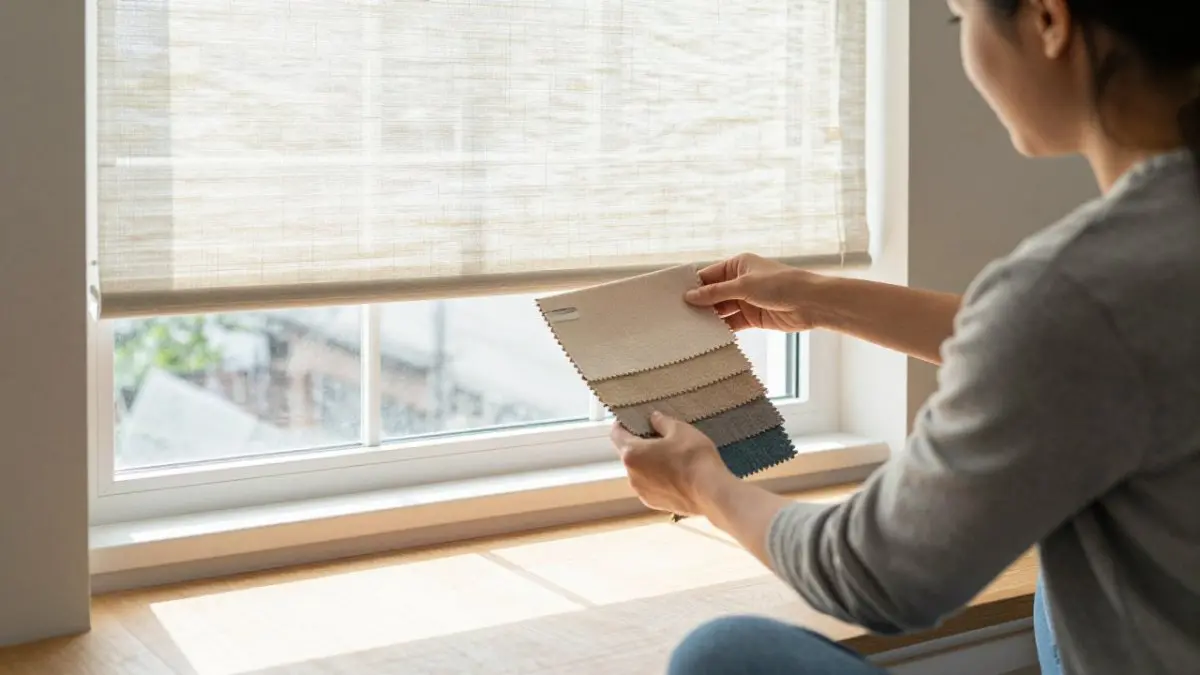
Professional measuring accounts for the things a tape measure misses: out-of-square frames, protruding hardware, and trim depth. In older homes, that matters more than most buyers realize. Arched, bay, and specialty-shaped windows simply do not exist in standard retail sizes, so a custom build is often the only path to a clean fit and finish.
Design Flexibility and Personalization
Fabric weight, color and pattern, lining, and operating style all change how a room feels and functions. A heavy linen drapery in a bedroom and a light-filtering shade in a kitchen are different tools for different jobs. Custom work lets you match both to the room rather than settling for whatever the shelf offers.
Drawbacks of Store-Bought Window Treatments
Store-bought treatments are not a bad product. They are a compromise, and it helps to see exactly where that compromise lands.
- Fit gaps: Standard widths rarely match your window, so light leaks around the edges.
- Limited selection: You choose from what is in stock, not what suits the room.
- Shorter lifespan: Lighter hardware and mass-produced materials often wear faster.
- Replacement cycle: When one panel fails, matching it later can be difficult.
Ready-made options make sense for renters, temporary setups, and rooms where the budget is the deciding factor. Just go in knowing you are trading fit and longevity for savings today.
Custom Blinds vs Store-Bought Blinds: Durability and Lifespan
Durability is where the cost conversation usually turns.
A comparison from Austintatious Blinds on ready-made versus custom treatments notes that store-bought options can save money in the short term, while pointing out that this often comes with lower quality. A drapery retailer, Bloomin’ Blinds on custom drapery cost and lifespan, acknowledges the higher upfront cost of custom work and claims a longer lifespan, though it supplies no comparative figures.
Treat longevity claims as directional, not guaranteed. What you can compare concretely is warranty coverage and repairability.
- Warranty. Read the warranty terms carefully, including what is excluded and whether labor is covered.
- Repairability. Ask whether replacement parts are available for the treatment you choose.
- Replacement parts. Ask whether the fabric or finish will still be available in the future.
A fair way to judge long-term value is to ask three questions before buying: what does the warranty cover, can I buy replacement parts, and will this pattern still exist if I need one more panel? Ask rather than assume.
Custom Window Treatment Cost: Upfront Price vs Long-Term Value
Custom window treatment cost is higher at the register. That is not in dispute. What buyers should weigh is cost per year of service, not the sticker price alone. To make that comparison real, you need ranges rather than a single number, and you need to know which factors move the quote.
A practical way to frame it is by treatment type and window size. The ranges below are typical planning figures for a single standard window, not a quote; your actual number depends on the factors listed after the table.
| Treatment type | Store-bought (typical range per window) | Custom (typical range per window) |
|---|---|---|
| Roller or solar shade | $20-$80 | $150-$450 |
| Cellular/honeycomb shade | $30-$120 | $200-$600 |
| Faux-wood or wood blinds | $40-$150 | $250-$700 |
| Roman shade | $40-$150 | $300-$900 |
| Drapery panel (per panel) | $30-$120 | $250-$1,200+ |
| Shutters (per window) | Not typically stocked | $400-$1,200 |
These are planning ranges, not promises. A wide bay window, a specialty shape, or a premium fabric can push a custom quote well past the top of its band, while a small standard window in an in-stock fabric can land near the bottom.
Custom window treatment cost also includes professional measuring, which helps avoid the common and costly DIY mistake of ordering the wrong size.
Watch out: comparing a custom quote that includes measuring and installation against a store-bought sticker price is not apples to apples. Add the cost of an installer, a reorder, or your own hours before you decide the custom option is more expensive.
Pricing depends on window count, dimensions, and material. The right move is to request a quote for your actual windows from Carroll Shade’s website.
Custom vs store-bought window treatment cost per window
Window Treatments for Privacy and Light Control
Window treatments for privacy and light control are where fit stops being cosmetic. A covering that does not sit flush to the frame lets in light at the edges, which matters most in bedrooms and bathrooms. Custom shades can be built to overlap the frame, and room-darkening linings can be specified for the rooms that need them.
Window treatments for privacy and light control also include operating style. Top-down/bottom-up shades let you keep privacy at street level while letting daylight in up high. Motorized options can help with hard-to-reach windows, and Carroll Shade offers motorized window treatment options. If safety around cords is a concern in your home, ask about cordless and motorized operating systems when you spec the job.
Custom Window Treatment Installation: What to Expect
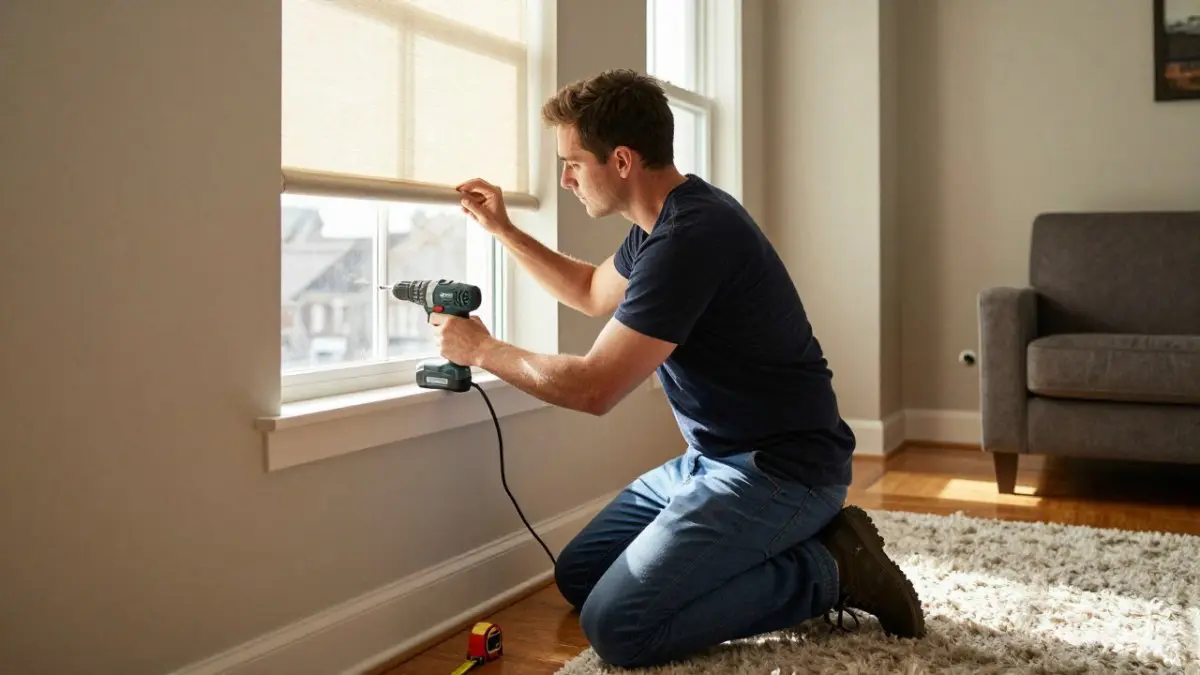
Custom window treatment installation includes an in-home consultation, professional measuring, and mounting by a trained installer. Measuring is the step that helps ensure a correct fit.
If you want to see how our installation and repair work fits together, our team handles expert window installation and repair services for blinds, shades, and shutters.
Watch out: self-measuring an out-of-square window and ordering to the wrong dimension can lead to a costly redo.
Schedule Your In-Home Window Treatment Consultation
The fastest way to settle the custom versus store-bought question is to see your own windows measured and quoted. A consultation turns a vague comparison into real numbers for your home, and it takes the guesswork out of sizing odd or antique windows.
Carroll Shade is a family-owned business and an authorized Hunter Douglas partner, and we have served the area since 1932. We provide installation and blind repair services, and we offer motorized window treatment options. You can contact us to ask questions or set up a visit.
The real question is not which option is cheaper on day one. It is which one you will still be happy with in five years. If you want a precise fit, a design that matches your rooms, and a team that comes back when something needs repair, Carroll Shade can help. We offer custom Hunter Douglas designs, professional installation, motorized options, and ongoing repair service. Get started with Carroll Shade and get window treatments measured for your actual windows.
Frequently Asked Questions
Are custom window treatments worth the extra cost?
Custom window treatments cost more upfront than store-bought options. The right choice depends on your budget, window shapes, and how long you plan to keep the treatments.
How do custom blinds vs store-bought blinds compare for unusual window sizes?
Store-bought blinds come in standard sizes, so arched, specialty-shaped, or oversized windows often end up with gaps and light leaks. Custom blinds are made to your exact window dimensions, which means a precise fit even for unusual window sizes. That fit matters for privacy and light control. If your home has older or architecturally unique windows, ask about custom options for a better fit.
Can custom window treatments really improve energy efficiency?
Window treatments can affect light and privacy in a room, and the fit of a treatment to the window frame is one factor in how it performs. Energy results depend on your window type, climate, and how you operate the treatments.
What does custom window treatment installation involve?
Custom window treatment installation typically starts with an in-home consultation and professional measuring. Trained installers then mount the hardware and treatments. Carroll Shade provides both professional installation and blind repair services.

