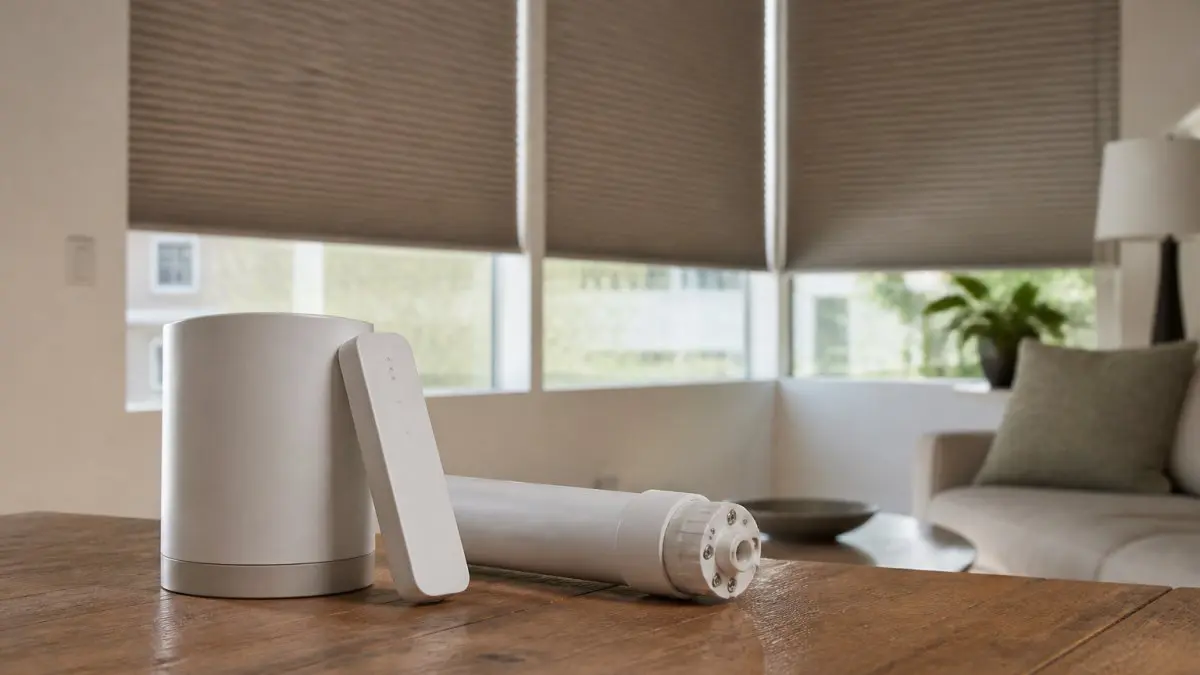
Are Motorized Window Treatments Worth It in Boston?
Last Updated: October 25, 2026
Quick Summary
Motorized window treatments are worth it in Boston when you have tall or hard-to-reach windows, want consistent light control across a room, or are updating a home for sale. They are harder to justify for a single small window, since motors add cost and battery models need periodic charging.
- Battery-powered roller shades for a standard window typically run USD 450-900 installed in the Boston market.
- Hardwired motors cost more upfront but eliminate recharging, making them the better choice when walls are already open.
- Choose your home automation platform first, then pick shades certified for it to avoid compatibility headaches.
- Arched and angled windows almost never fit off-the-shelf motorized shades and require custom fabrication.
- Ask for a line-item quote separating shade, motor, fabric, controls, wiring, installation, and programming.
Table of Contents
- Why Boston Homeowners Are Choosing Motorized Window Treatments
- Quick Comparison: Motorized Window Treatment Options for Boston Homes
- Smart Blinds Pros and Cons for Boston Homes
- Motorized Blinds for Tall Windows and Hard-to-Reach Glass
- Smart-Home Window Shades: Compatibility and Control
- What Motorized Shade Installation Involves
- What Drives Cost for Residential Motorized Window Treatments in Boston
- Book an In-Home Consultation with Carroll Shade
- Frequently Asked Questions
Why Boston Homeowners Are Choosing Motorized Window Treatments
The global automated window blinds market was estimated at USD 2.06 billion in 2025 and is projected to grow at a 7.3% compound annual growth rate through 2035, according to Global Market Insights’ automated window blinds market analysis.
At Carroll Shade, we have fitted window coverings in the Boston and Brookline area since 1932, and the questions have shifted. Ten years ago, customers asked about fabric; now they ask about motors, remotes, and thermostat integration.
The honest answer: motorized treatments are worth it when you have windows you cannot comfortably reach, want consistent light control across a room, or are updating a house for sale.
Quick Comparison: Motorized Window Treatment Options for Boston Homes
Motorized window treatments fall into four practical categories. The right pick depends on window style, wiring situation, and how much control you want from a phone versus a wall switch.
| Option | Best For | Power Source | Control Style |
|---|---|---|---|
| Battery-powered roller shades | Renters and older homes without wiring | Rechargeable battery | Remote or app |
| Hardwired motorized shades | New construction and major renovations | Household wiring | Wall switch or app |
| Motorized drapery | Tall windows and sliding doors | Battery or wired track | Remote or app |
| Smart blinds with hub integration | Whole-home automation setups | Battery or wired | App, voice, and scenes |
Battery-powered motors have become more accessible in recent years, with longer battery life cited among the improvements by The Shade Store’s 2026 window treatment trends report. That matters in Boston’s older housing stock, where running new wiring to a window frame is often the most expensive part of the project.
Smart Blinds Pros and Cons for Boston Homes
Smart blinds are window coverings with a motor that responds to a remote, an app, or a home automation system.
The pros are real.
The cons deserve equal weight. Motors add cost, battery models need periodic charging, integration varies by brand, and a failed motor means a service call rather than a cord you can tug.
Our view: smart blinds pay off most in rooms you use daily and windows you cannot reach.
Motorized Blinds for Tall Windows and Hard-to-Reach Glass
Motorized blinds solve a specific problem: windows you cannot safely reach. In Boston’s brownstones and Victorian-era homes, that often means second-story arched windows, stairwell glass, and transoms above doorways.
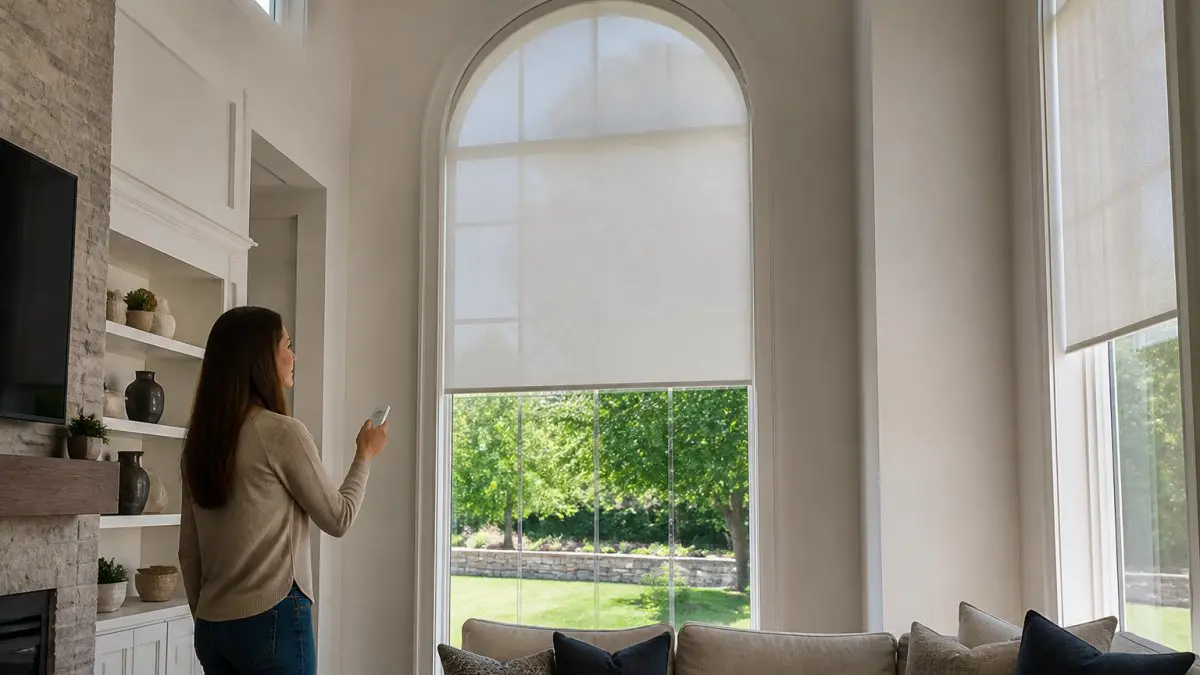
Manual operation usually means a long pole, a step stool, or leaving the shade where it landed months ago.
Measuring matters most. Tall and arched windows are rarely square, and older homes settle.
Watch out: on arched and angled windows, off-the-shelf motorized shades almost never fit cleanly.
Smart-Home Window Shades: Compatibility and Control
Smart-home window shades connect to the systems already running your house.
Most motorized shades offer three control paths: a physical remote, a phone app, and home automation platform integration. Some also support voice control. Compatibility varies by brand, so confirm it before you order.
A common mistake is buying shades first and asking about integration second.
For whole-home setups, scheduling and scenes deliver most of the value.
The three control layers, compared
| Control layer | What it is good for | What to watch for |
|---|---|---|
| Physical remote | Fast, reliable, no network needed; best for guests and daily one-touch use | Easy to lose; one remote per room adds clutter; some remotes control only one brand |
| Phone app | Scheduling, grouping rooms, adjusting limits, checking battery level | Requires a hub or bridge for some brands; app updates can change behavior; Wi-Fi outages can interrupt cloud-dependent features |
| Home automation platform | Scenes that combine shades with lights, thermostat, and security; voice control | Platform compatibility varies by motor; older hubs may not support newer shade firmware; setup is more complex |
Platform compatibility in practice
Amazon Alexa, Google Home, Apple Home, and Samsung SmartThings each support a different subset of shade brands and models, and support can change with firmware updates. Before ordering, confirm the exact motor model, the platform it is certified for, and whether a hub or bridge is required.
Some motors use a proprietary hub, others connect directly over Wi-Fi, and a few rely on a low-power protocol needing a bridge.
Scheduling, scenes, and voice control
Scheduling is the feature most homeowners actually use: a shade that opens at sunrise and closes at dusk handles light and privacy without daily input. Scenes go further, combining shades, lights, and thermostat in one command. Voice control is convenient but rarely decisive, most people use a remote or wall switch daily.
If you are building a whole-home setup, choose the automation platform first, then pick shades certified for it. Retrofitting a platform to shades that were not designed for it is where most compatibility headaches start.
What to confirm before you buy
Ask the dealer for the motor model number, supported platforms, whether a hub or bridge is included, and how firmware updates are delivered. Confirm manual operation works during a network outage and the remote or wall switch does not depend on the cloud.
What Motorized Shade Installation Involves
Motorized shade installation is a measured, multi-step process rather than a single visit. Here is how it typically runs:
- In-home consultation. We review each window, discuss light and privacy goals, and talk through power options.
- Precise measurement. Every opening is measured at multiple points, with frame depth and mounting surface noted.
- Product selection. Fabric, opacity, and motor type are chosen together, since some motors suit certain shade styles better.
- Custom fabrication. Shades are built to the measured dimensions, which is where arched and non-standard windows get resolved.
- Installation. Brackets are mounted, motors paired to remotes or the app, and limits set so shades stop at the right height.
- Walkthrough. We test every shade, confirm the schedule or scenes, and show you how to recharge or service the motor.
If you want to see the full scope of what our team handles, you can review our window installation and repair services. The measurement step is where most DIY projects fail. A shade ordered a half-inch off will not seal, and motorized units are not cheap to redo.
What Drives Cost for Residential Motorized Window Treatments in Boston
Pricing for residential motorized window treatments in Boston depends on several variables, and no honest quote comes before measurement. Two windows of the same size can land in different brackets once motor type, fabric, and mounting are factored in.
The main cost drivers are:
- Window count and size. More windows and larger spans mean more motors and more fabric.
- Motor type. Battery motors cost less to install; hardwired motors cost more upfront but skip recharging.
- Fabric and opacity. Designer fabrics and blackout liners sit at the higher end.
The best way to get a real number is an in-home assessment. Online prices elsewhere usually exclude installation, wiring, and custom sizing, which is why they look lower.
Installed price ranges to plan around
The ranges below are planning estimates for a single motorized shade, installed, in the Boston market. They are not quotes; actual pricing depends on measurement, motor model, fabric, and site conditions.
| Configuration | Typical installed range per window | Notes |
|---|---|---|
| Battery-powered roller shade, standard window | USD 450-900 | Rechargeable motor, remote or app; no wiring |
| Battery-powered roller shade, large or tall window | USD 700-1,400 | Larger fabric span and heavier motor |
| Hardwired motorized shade, new construction or renovation | USD 900-1,800 | Includes wiring rough-in when walls are open |
| Hardwired motorized shade, retrofit with new wiring | USD 1,200-2,500+ | Wiring is the largest variable; finished-wall repair adds cost |
| Motorized drapery track, standard opening | USD 800-1,600 | Battery or wired track; fabric and lining separate |
| Custom arched or angled motorized shade | USD 1,500-3,000+ | Custom fabrication and templating drive the upper end |
These ranges assume a single window and standard mounting. Whole-room and whole-home projects usually lower the per-window cost because measurement, travel, and setup are shared across more units.
Battery versus hardwired: the real economics
Battery motors cost less to install, no electrician, no wall repair, but most rechargeable motors need a charge every six to twelve months, and tall windows may require a ladder or charging wand.
A practical rule: if you are remodeling and the walls are open, hardwire. If you are retrofitting a finished room, battery is usually the lower-risk path. A hybrid approach, hardwired in the rooms you use most, battery elsewhere, is common.
How to read a motorized shade quote
Ask for a line-item quote separating shade, motor, fabric, controls, wiring, installation, and programming. Confirm whether it includes removal of existing treatments, wall repair after wiring, and a walkthrough to set limits and scenes. Ask about the motor warranty separately from the fabric warranty, and who handles service calls and any trip charge.
Be cautious of quotes that bundle everything into one number. Without line items, you cannot tell whether wiring, programming, or wall repair is included, and those are the items most likely to appear as change orders later.
What moves you up or down a bracket
Factors pushing a project higher: out-of-square openings requiring templating, blackout liners and designer fabrics, dual-roller setups, and whole-home programming. Factors keeping cost lower: standard window sizes, battery motors, stock fabrics, and grouping multiple windows into one visit.
Book an In-Home Consultation with Carroll Shade
The gap between a good motorized setup and a frustrating one comes down to measurement, product fit, and who answers the phone when something needs adjusting, where a local, family-owned shop earns its keep.
Our process starts with a no-pressure in-home consultation where we measure your windows, talk through power options, and quote against your actual space. You can contact us to schedule a visit or ask a question before you commit.
Get started with Carroll Shade and get window treatments measured, fitted, and installed by a team that will still be here when you need service.
Frequently Asked Questions
What are the downsides of motorized blinds?
Motorized blinds cost more upfront than manual versions and rely on power, either batteries you replace periodically or low-voltage wiring. Motors can fail, so buying from a provider that also handles repairs matters. Battery-powered motors have improved, but you still plan for battery changes. If a window is easy to reach and rarely adjusted, a manual treatment may be the simpler choice. For tall, hard-to-reach, or frequently adjusted windows, the convenience usually outweighs these drawbacks.
How much do residential motorized window treatments cost?
Pricing depends on window size, fabric, motor type, and how many windows you cover, so there is no single figure. Cost drivers include custom sizing, power choice (battery versus wired), smart-home compatibility, and installation complexity in older Boston homes. For an accurate number on your windows, request a quote from Carroll Shade.
Can motorized blinds work with a smart-home system?
Many can. Motorized shades and blinds from brands like Lutron and Hunter Douglas integrate with smart-home platforms and support remote, app, and voice control. Compatibility varies by motor and hub, so confirm which systems your chosen product supports before ordering. A dealer can tell you whether your existing setup works or whether you need a bridge device. Scheduling shades to open with sunrise or close at dusk is one of the most common uses.
Are motorized shades worth it for tall or hard-to-reach windows?
For tall windows, two-story foyers, and windows above furniture, motorized shades are often the practical answer. You avoid ladders and cords, and you can adjust light without climbing. Motorized blinds for tall windows also handle wide spans that manual wands struggle with. The trade-off is higher cost and a power source. If you have several hard-to-reach windows, the safety and convenience gains usually justify the investment.
How are motorized blinds installed and maintained?
Professional motorized shade installation includes measuring each window, checking the mounting surface, wiring or mounting the motor, and pairing remotes or smart-home controls. In older Boston homes, installers often deal with uneven plaster and nonstandard window dimensions, which is why in-home measuring matters. Maintenance is minimal: dust the fabric, keep the motor housing clear, and replace batteries when response slows. Buying from a provider that also repairs blinds means you have someone to call if a motor or component fails.

